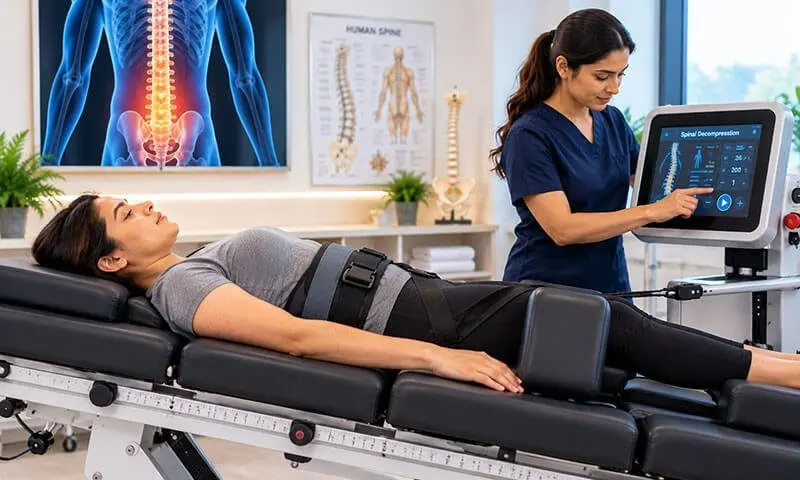
Spinal decompression is a controlled, motorised traction therapy that gently stretches the lower back or neck. It is used to ease pressure on irritated discs and nerves in conditions such as slip disc, sciatica and cervical radiculopathy, alongside manual therapy and exercise.
How decompression works
You lie comfortably on a treatment table with a harness around the pelvis (for the lower back) or a support under the head (for the neck). A computer-controlled system applies a gentle pulling force, then slowly releases it, in cycles. The aim is to create space between vertebrae, reduce pressure on a bulging disc and give an irritated nerve some breathing room.
Conditions it is used for
- Lumbar disc bulge or slip disc
- Sciatica and radiating leg pain
- Cervical disc problems with arm pain or tingling
- Degenerative disc disease
- Facet joint irritation
Is it right for you?
Decompression is not suitable for everyone. We examine you and review any MRI or X-ray first. It is avoided in pregnancy, after spinal fusion or with metal implants in the spine, in severe osteoporosis, spinal fractures, tumours or infections, and in people with progressive nerve weakness or bladder and bowel changes – these need urgent medical review.
What a course of treatment looks like
Each decompression session lasts around 15 to 25 minutes. It feels like a slow, comfortable stretch; it should never be painful. Most people have a series of sessions over a few weeks, with the pulling force adjusted to how they respond. Decompression is combined with chiropractic or osteopathic techniques for the surrounding joints and a core and hip strengthening programme, which is what helps prevent the problem from returning.
After treatment
We suggest walking gently afterwards and avoiding heavy lifting, long car journeys or sitting for long periods that day. Follow the exercises you are given, and let us know if leg or arm symptoms change.
Decompression vs ordinary traction
Traditional traction applies a steady pull. Modern decompression systems vary the force in cycles and control the angle of pull, aiming to target a specific level of the spine while helping the muscles stay relaxed. In practice, the most important factor is careful patient selection and combining it with active rehabilitation.
Who tends to benefit most
- People with disc-related leg or arm pain that changes with position
- Those whose pain eases when lying down or with gentle traction tests
- Patients willing to follow a core and posture programme alongside
Spinal Decompression Therapy: questions patients ask us
Is spinal decompression painful?
No. It should feel like a gentle, relaxing stretch. Tell the therapist straight away if anything hurts.
How many decompression sessions are usually needed?
Commonly 8 to 15 sessions over several weeks, depending on the condition and your progress.
Can decompression fix a slip disc permanently?
It can reduce pressure and pain, but long-term results depend on strengthening, posture and lifting habits. That is why it is combined with exercise.
Do I need an MRI before decompression?
Not always, but if you have one, please bring it. We may suggest imaging if nerve symptoms are significant.
Who should not have spinal decompression?
People who are pregnant, have spinal fusion or implants, severe osteoporosis, fractures, tumours or progressive nerve weakness.

Reviewed by Dr. Varun Duggal – Chiropractor, Osteopath and Physiotherapist (MPT Ortho), Kirti Nagar, New Delhi.
Last updated: