Paralysis is loss of muscle function in part of the body, caused by stroke, spinal cord injury, nerve damage or conditions such as Guillain-Barré syndrome. Physiotherapy cannot repair nerve tissue directly, but it helps recover what is possible, prevents complications and maximises independence through strengthening, mobility and functional training.
Types of paralysis we work with
- Hemiplegia – one side of the body, usually after a stroke
- Paraplegia – both legs, often after spinal cord injury
- Quadriplegia – arms and legs, from higher spinal cord injury
- Monoplegia – one limb, sometimes from nerve injury
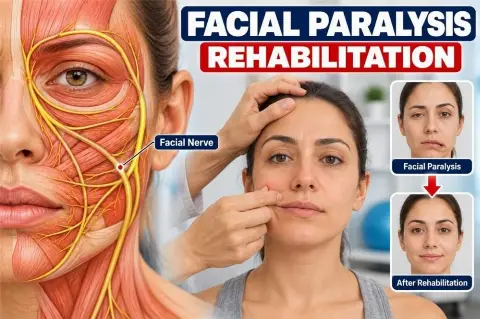
- Facial paralysis – such as Bell’s palsy
- Temporary paralysis – such as Guillain-Barré syndrome
Partial vs complete
Recovery potential depends heavily on whether some nerve signals still get through. In partial (incomplete) paralysis, targeted exercise can often strengthen the remaining connections. In complete injuries, the focus shifts to maximising function with the muscles that work, using equipment, and preventing complications.
Goals of rehabilitation
- Strengthen active muscles and encourage any returning movement
- Maintain joint range and prevent contractures
- Manage spasticity
- Train sitting balance, transfers and – where possible – standing and walking
- Prevent pressure sores, chest infections and blood clots
- Advise on wheelchairs, walkers, splints and home adaptations
- Teach carers safe handling
A realistic, hopeful approach
We never promise a full cure, because that would not be honest. What we promise is a thorough assessment, clear goals and steady, focused work. Small gains – sitting without support, standing to transfer, using a hand to eat – change daily life enormously.
Preventing complications at home
- Change position every two hours in bed to prevent pressure sores; check heels, hips and the lower back daily.
- Move every joint gently through its range each day to prevent stiffness.
- Breathing exercises and sitting up for meals help protect the lungs.
- Support the affected limbs with pillows in good positions.
- Seek medical help for fever, calf swelling, breathlessness or new skin breakdown.
Paralysis: questions patients ask us
Can paralysis be cured with physiotherapy?
Physiotherapy cannot repair damaged nerves directly, but it can help recover function where nerve pathways remain and greatly improve independence.
How early should rehab start for paralysis?
As soon as the medical team says it is safe – early rehab prevents complications and supports recovery.
How can families help?
By helping with daily exercises, positioning and safe transfers, which we teach during sessions.
What equipment might be needed?
Depending on the person, a walker, wheelchair, splints or bathroom aids. We advise on what will help most.

Reviewed by Dr. Varun Duggal – Chiropractor, Osteopath and Physiotherapist (MPT Ortho), Kirti Nagar, New Delhi.
Last updated: