Posture correction therapy combines a detailed posture assessment, hands-on treatment for stiff areas, targeted strengthening and workstation advice. It helps people with rounded shoulders, forward head posture and desk-related neck and back pain.
A realistic view of “good posture”
There is no single perfect posture that everyone should hold all day. Problems tend to come from staying in one position for too long – usually a slumped one – while certain muscles weaken and others tighten. Posture therapy aims to give your body the strength and flexibility to sit and stand well without effort, and the habits to change position often.
Signs your posture may be contributing to pain
- Neck and shoulder ache that builds through the working day
- Head that sits forward of the shoulders in photos
- Rounded shoulders or an increasing upper-back curve
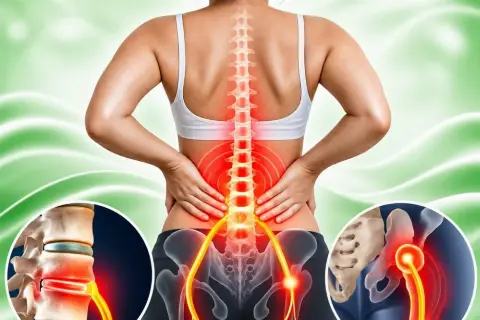
- Low back ache after sitting that eases when you stand or walk
- Headaches that start at the base of the skull
How we assess posture
We look at how you stand, sit and move, check the flexibility of the chest, hips and hamstrings, test the strength of the deep neck, upper-back and core muscles, and ask about your workstation, phone use, sleep and exercise. Photos may be taken (with your permission) so you can see changes over time.
What correction involves
- Freeing stiff areas – chiropractic or osteopathic techniques for a stiff upper back, neck or hips.
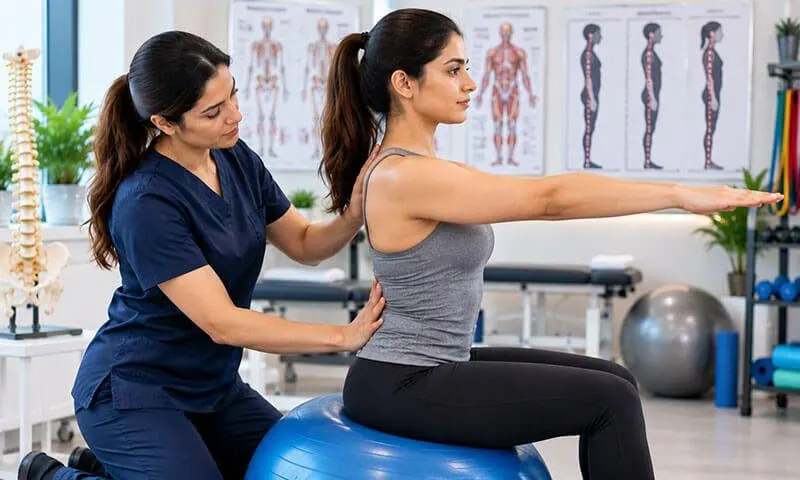
- Strengthening – deep neck flexors, shoulder-blade muscles, glutes and core.
- Stretching – chest, hip flexors and other tight muscle groups.
- Workstation and phone set-up – screen height, chair, keyboard position and break reminders.
- Habit change – small, repeatable cues that stick.
For children and teenagers
Heavy school bags and long screen time affect young spines too. We offer posture checks for children, and refer for a scoliosis assessment if we notice an unusual curve.
A sample posture programme
- Weeks 1–2: release stiff areas, learn chin tucks and shoulder-blade setting, fix your workstation.
- Weeks 3–6: strengthen upper back, deep neck and core muscles; add hip and chest stretches.
- Weeks 7–12: build endurance so good posture becomes automatic during long workdays.
Progress is tracked with posture photos and simple tests, so you can see the change as well as feel it.
Posture Correction Therapy: questions patients ask us
Can posture really be corrected in adults?
Yes, to a meaningful degree. Strength, flexibility and habits can all change at any age, which usually reduces pain and makes upright posture feel easier.
Do posture correctors or braces help?
They can remind you to sit up for short periods, but relying on them can weaken muscles. Exercise-based correction gives longer-lasting results.
How long does it take to see a difference?
Many people feel less pain within a few weeks. Visible changes in posture usually take two to three months of consistent exercise.
Can you check my child’s posture?
Yes. We assess children and teenagers and give school-bag, screen-time and exercise advice.

Reviewed by Dr. Varun Duggal – Chiropractor, Osteopath and Physiotherapist (MPT Ortho), Kirti Nagar, New Delhi.
Last updated: