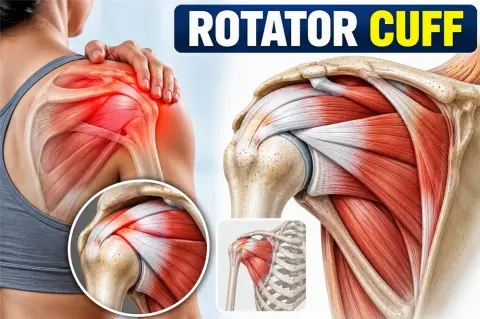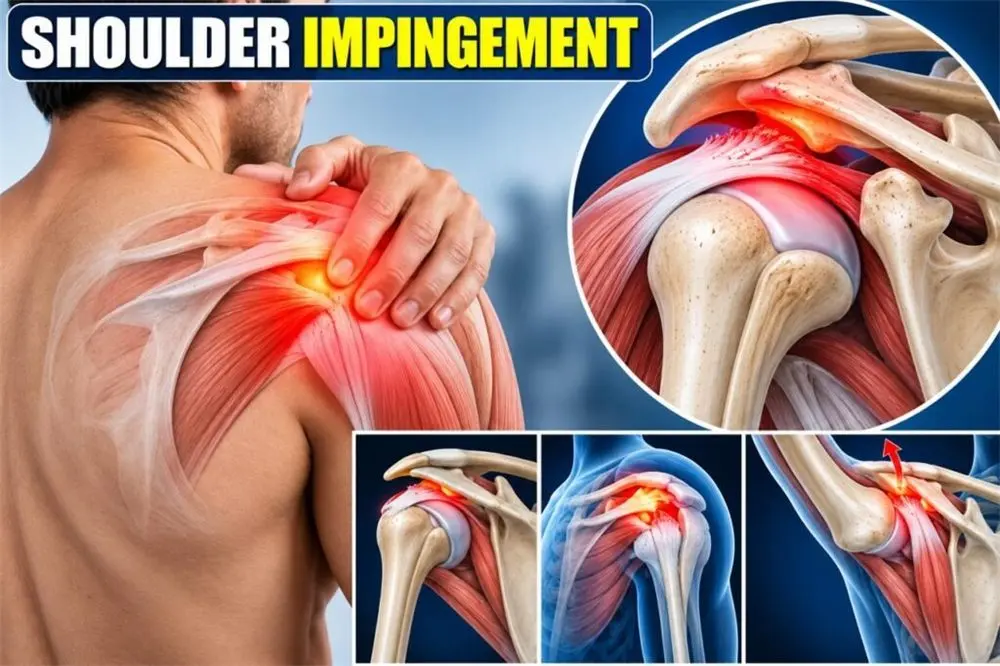
Shoulder impingement describes pain when lifting the arm, often between shoulder and head height, because the tendons and bursa at the top of the shoulder are irritated. Poor shoulder-blade movement, rounded posture and weak rotator cuff muscles are common contributors. Exercise-led rehab works well for most people.
The “painful arc”
A hallmark of impingement is pain that appears as the arm rises to the side, peaks somewhere between shoulder and head height, and eases as the arm goes higher or lower. Many patients also notice pain putting on a jacket, reaching to a high shelf or sleeping on that side.
Why it develops
- Rounded shoulders and a stiff upper back reduce the space at the top of the shoulder
- Weak or poorly coordinated shoulder-blade muscles
- Rotator cuff tendinopathy
- Repeated overhead work or sport – painting, swimming, badminton, cricket bowling
- Sometimes the shape of the bone above the shoulder
What we do
- Upper-back mobilisation and chiropractic adjustment to improve posture
- Soft-tissue release of tight chest and upper-trapezius muscles
- Retraining the shoulder blade to rotate and tilt properly
- Rotator cuff strengthening
- Activity modification – temporarily avoiding painful overhead loading
- Laser or ultrasound for irritated tendons
Expected recovery
Most people improve within 6 to 12 weeks of consistent rehabilitation. Surgery (subacromial decompression) is now rarely recommended, as research shows exercise-based treatment gives similar results for most people.
Shoulder Impingement: questions patients ask us
What is the main cause of shoulder impingement?
Usually a combination of tendon overload, rounded posture and poor shoulder-blade control, rather than a single cause.
Can I lift weights with impingement?
Yes, with modifications. Avoid painful overhead lifts for a while and focus on rotator cuff and shoulder-blade strength.
Is surgery needed for impingement?
Rarely. Exercise-based rehabilitation is the recommended first treatment and works for most people.
Does posture really affect impingement?
Yes. Rounded shoulders and a stiff upper back reduce space at the top of the shoulder.
How long does shoulder impingement take to heal?
Most people see good improvement within 6 to 12 weeks.

Reviewed by Dr. Varun Duggal – Chiropractor, Osteopath and Physiotherapist (MPT Ortho), Kirti Nagar, New Delhi.
Last updated: