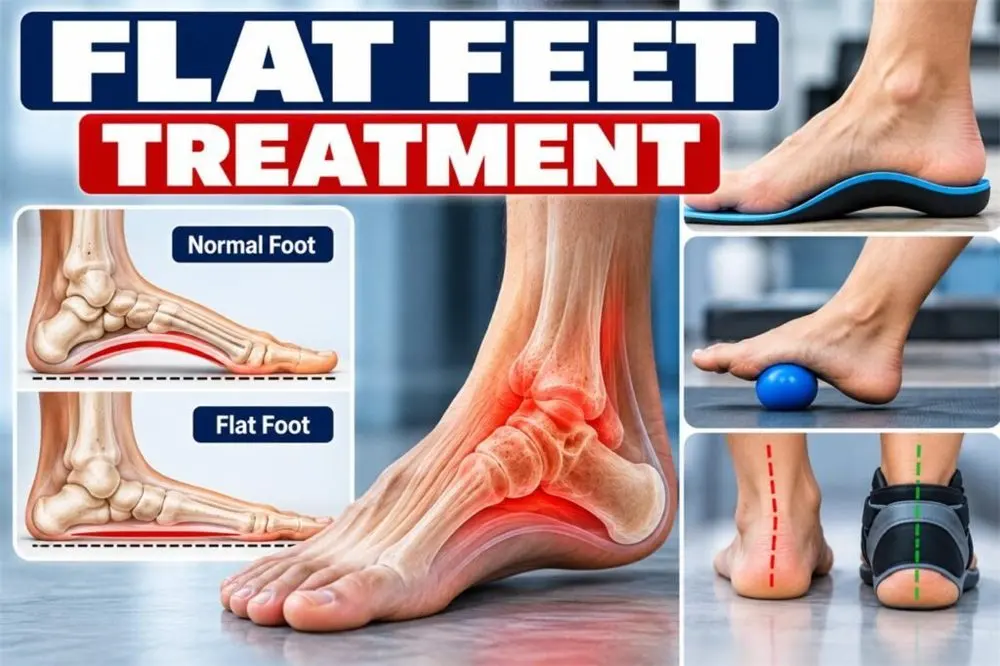
Flat feet (pes planus) means the arch is low or collapses on standing. Flexible flat feet are common and often painless. When they cause foot, knee or back pain, or when an adult’s arch is gradually collapsing, treatment with foot and hip strengthening, footwear and insoles, and gait training helps.
Types of flat feet
- Flexible flat feet – the arch appears when sitting or on tiptoe; very common and often harmless
- Rigid flat feet – no arch in any position; needs specialist assessment
- Adult-acquired flat foot – the arch gradually collapses, often due to tibialis posterior tendon problems; needs early treatment
In children
Most young children have flat-looking feet because the arch develops through early childhood. If your child is active and pain-free, flat feet usually need no treatment. Signs to check include pain, frequent tripping, stiffness or one foot very different from the other.
Symptoms when flat feet cause trouble
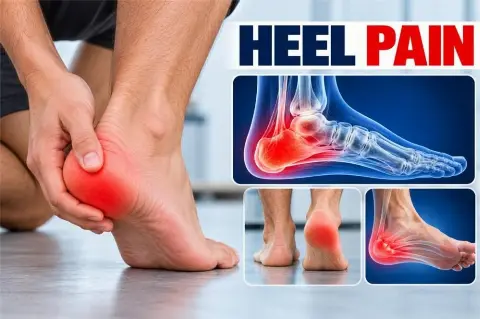
- Aching arch or heel after standing
- Pain on the inner ankle
- Shin, knee or lower back pain
- Shoes wearing unevenly
- Tired legs
Treatment
- Intrinsic foot strengthening – short foot exercise, towel curls
- Calf and tibialis posterior strengthening
- Hip strengthening to control knee and foot rolling
- Ankle mobilisation for stiff joints
- Supportive footwear and insoles where appropriate
- Walking and running technique training
Adults with a rapidly flattening arch and inner ankle pain should be assessed early, as tendon problems respond better when caught early.
Flat Feet: questions patients ask us
Are flat feet a problem?
Not always. Many people with flexible flat feet have no symptoms and need no treatment.
Can exercises create an arch?
Strengthening can improve foot control and comfort, though the overall structure may change only a little.
Do children with flat feet need insoles?
Usually not if they are pain-free and active. Insoles may help if there is pain.
Can flat feet cause knee pain?
Yes, by allowing the knee to roll inward during walking and running.
Why are my feet getting flatter as an adult?
Often due to weakening of the tibialis posterior tendon. This should be assessed early.

Reviewed by Dr. Varun Duggal – Chiropractor, Osteopath and Physiotherapist (MPT Ortho), Kirti Nagar, New Delhi.
Last updated: