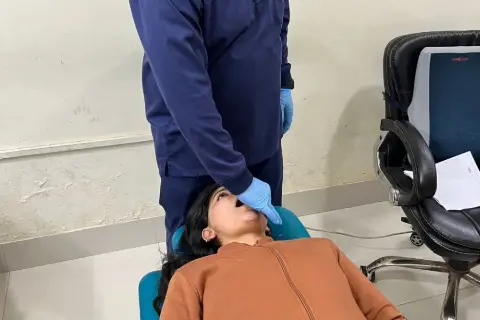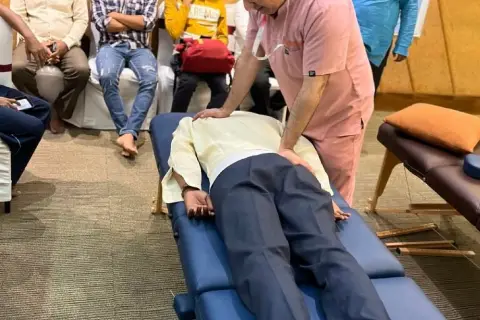
Spinal alignment adjustment uses precise chiropractic techniques to restore normal movement to stiff segments of the neck, mid-back and lower back. Combined with posture work and exercise, it helps relieve back and neck pain and improves how the spine moves and carries load.
What “alignment” really means
Bones don’t usually slip “out of place” in everyday back pain. What happens is that some spinal joints become stiff and stop moving well, muscles tighten around them, and nearby joints work harder to compensate. Alignment care aims to restore balanced movement through the spine so no single area is overloaded.
Signs your spine may benefit
- Neck or back stiffness that is worse in the morning or after sitting
- Pain turning your head or bending
- One shoulder or hip appearing higher than the other
- Recurring tension headaches
- Aching between the shoulder blades
Techniques we use
- Diversified adjustments – precise, quick movements to restore motion to stiff segments
- Instrument-assisted adjustment – a gentle, low-force option for sensitive patients
- Mobilisation – slower, rhythmic movement when manipulation is not suitable
- Pelvic balancing – because the pelvis is the base the spine sits on
Keeping the spine moving well
Adjustments help most when combined with daily habits: changing position every 30 minutes, a screen at eye level, a supportive pillow, and simple core and upper-back exercises. We give you a short routine at the first visit.
See a doctor urgently for back or neck pain with fever, unexplained weight loss, bladder or bowel changes, or new weakness in the arms or legs.
Spinal Alignment: questions patients ask us
Can chiropractic straighten my spine?
It can improve movement and posture and reduce pain. Structural curves such as scoliosis may change less, but symptoms often improve.
Is the cracking sound bones moving back?
No. It is gas released in the joint fluid. An adjustment can work without any sound.
How many sessions are needed?
Many people improve in four to six sessions, combined with home exercises.
Is there a gentler option?
Yes. Instrument-assisted and mobilisation techniques are low-force alternatives.
Can I go to work after an adjustment?
Yes. Most people return to normal activities straight away.

Reviewed by Dr. Varun Duggal – Chiropractor, Osteopath and Physiotherapist (MPT Ortho), Kirti Nagar, New Delhi.
Last updated: