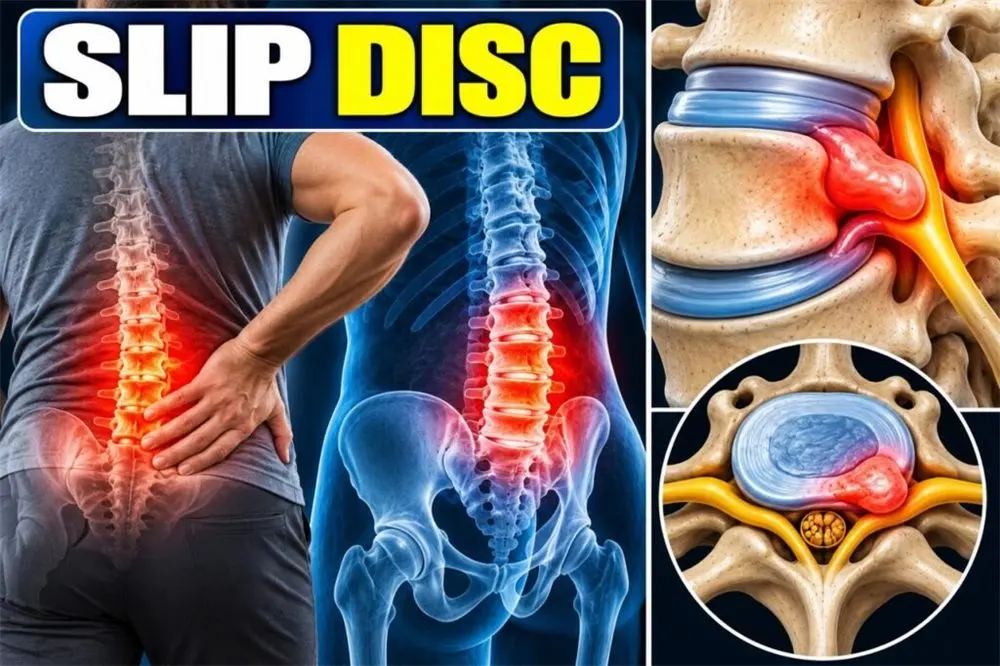
A slip disc is a disc whose soft centre bulges or leaks through its outer ring, sometimes pressing on a nerve. Despite the name, nothing slides out of place, and most cases recover without surgery. We use decompression, gentle spinal techniques and a staged exercise programme.
The truth about “slip disc”
Between each pair of vertebrae sits a disc – a tough outer ring with a gel-like centre. With age, repeated bending and sudden heavy loads, the outer ring can weaken. Part of the centre may bulge or push through, which doctors call a disc bulge, protrusion or herniation. In everyday Indian usage this is called a slip disc.
The encouraging news: the body is often able to shrink and reabsorb herniated disc material over time. Many people with frightening MRI reports recover fully without an operation.
Signs you may have a disc problem
- Lower back pain that is worse on bending forward, sitting or coughing
- Pain, numbness or tingling travelling into one leg (or arm, if the disc is in the neck)
- Difficulty standing up straight after sitting
- Muscle spasm that tilts you to one side
Seek emergency care for loss of bladder or bowel control, numbness in the saddle area, or rapidly increasing weakness in the legs.
Our non-surgical programme
Phase 1 – settle the pain
We identify positions and movements that reduce your leg pain (often called directional preference), and use spinal decompression, gentle mobilisation and soft-tissue work to ease spasm.
Phase 2 – restore movement
As pain centralises – moving out of the leg and back towards the spine – we gradually restore bending and twisting with controlled exercises.
Phase 3 – rebuild strength
Core, hip and back strengthening help share load away from the disc. We also teach lifting and sitting strategies you can use at work and home.
Do you need an MRI?
If you have significant leg symptoms, weakness or pain that is not improving, an MRI helps confirm the level and size of the disc problem. Bring any reports you already have. Remember that many people without pain also show disc bulges on MRI, so the scan is always read alongside the examination.
Recovery time
Most people feel a clear improvement in four to eight weeks, with continued gains over several months. Staying active within comfort, avoiding long sitting and keeping up the exercises are the biggest factors in a good recovery.
Common slip disc myths
- “The disc has slipped out and needs to be pushed back.” It hasn’t slipped – and the body can reabsorb bulging material by itself.
- “Complete bed rest is the cure.” Short rest for severe pain is fine, but gentle movement speeds recovery.
- “A big bulge on MRI means surgery.” The size on the scan does not decide surgery – symptoms and nerve function do.
- “I can never bend or lift again.” With good rehab, most people return to normal activities, including exercise.
Slip Disc: questions patients ask us
Can a slip disc heal without surgery?
Yes, in most cases. Herniated disc material often shrinks over weeks to months, especially with good rehabilitation.
Is chiropractic safe for a slip disc?
Gentle, carefully chosen techniques are generally safe after a proper examination. We avoid forceful manipulation at the affected level when nerve symptoms are strong.
Should I wear a lumbar belt?
A belt can help for a few days during a severe flare, but long-term use weakens the core. We will advise when to stop.
Which exercises should I avoid with a slip disc?
Early on, avoid heavy lifting, sit-ups, toe touches and long sitting. Your safe exercises depend on your assessment.
When is surgery needed for a slip disc?
For emergency signs such as bladder problems, progressive weakness, or severe pain that does not improve after several months of good treatment.
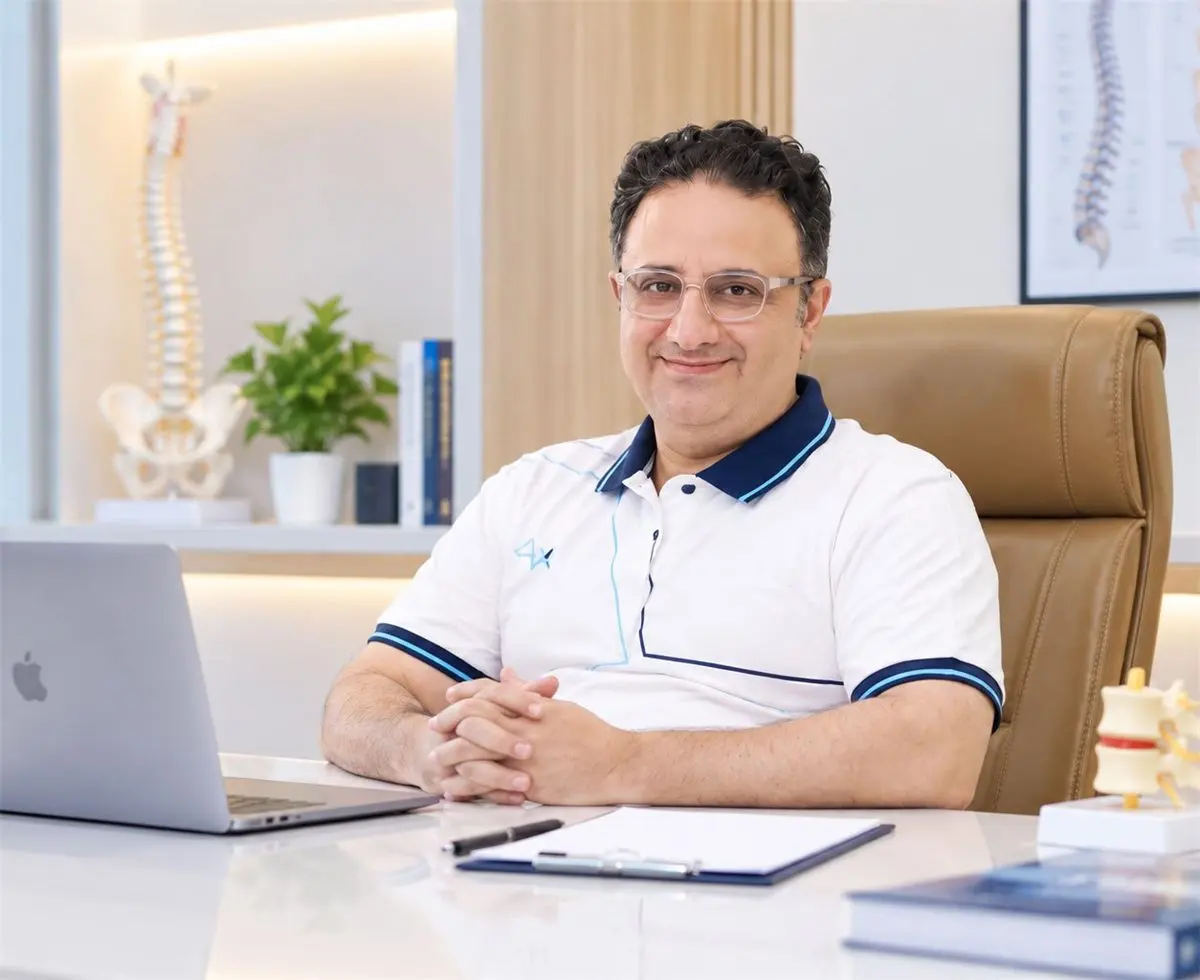
Reviewed by Dr. Varun Duggal – Chiropractor, Osteopath and Physiotherapist (MPT Ortho), Kirti Nagar, New Delhi.
Last updated: