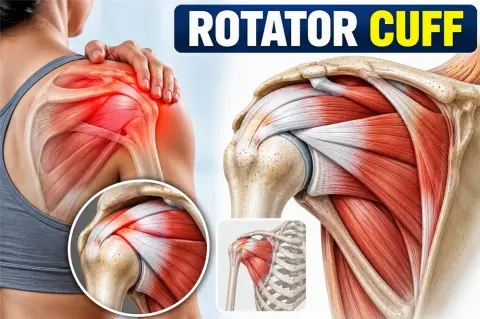
Biceps tendinitis is irritation of the long head of the biceps tendon where it runs through a groove at the front of the shoulder. It causes aching at the front of the shoulder, worse with lifting, pulling and overhead movement. It often occurs alongside rotator cuff problems and responds well to rest from aggravating loads and graded strengthening.
Where the pain comes from
The biceps has two tendons at the shoulder. The long head travels through a groove at the front of the upper arm and into the shoulder joint. Repetitive lifting, carrying, pulling and overhead movements can irritate it, especially when the rotator cuff is weak or posture is rounded.
Typical symptoms
- Deep ache at the front of the shoulder, sometimes travelling down the upper arm
- Pain lifting objects in front of you with palms up
- Pain with overhead activities, such as throwing or hanging clothes
- Occasional clicking
A sudden pop with bruising and a bulge in the upper arm (“Popeye” sign) suggests a ruptured tendon and should be checked by a doctor.
Who gets it
- Gym-goers doing heavy curls, rows and bench press
- Manual workers who lift and carry
- Swimmers, tennis and badminton players
- People over 40 with rotator cuff wear
Our treatment
- Temporarily reducing heavy lifting and painful overhead loading
- Soft-tissue release of the biceps, chest and front shoulder
- Shoulder and upper-back mobilisation
- Rotator cuff and shoulder-blade strengthening
- Gradual biceps loading – from isometric holds to slow curls
- Laser or ultrasound therapy for symptom relief
Most people improve within six to eight weeks.
Biceps Tendinitis: questions patients ask us
How is biceps tendinitis different from a rotator cuff problem?
Biceps tendinitis is felt more at the front of the shoulder; rotator cuff pain is often on the outer upper arm. They frequently occur together.
Can I keep training with biceps tendinitis?
Yes, with modifications. Reduce heavy curls and pressing for a while and follow a progressive plan.
What does a biceps tendon rupture feel like?
A sudden pop, bruising and a bulge in the upper arm. See a doctor promptly.
How long does biceps tendinitis take to heal?
Usually six to eight weeks, sometimes longer if the rotator cuff is also involved.
Does ice help biceps tendinitis?
Ice can ease pain after activity, but exercise and load management treat the problem.

Reviewed by Dr. Varun Duggal – Chiropractor, Osteopath and Physiotherapist (MPT Ortho), Kirti Nagar, New Delhi.
Last updated: