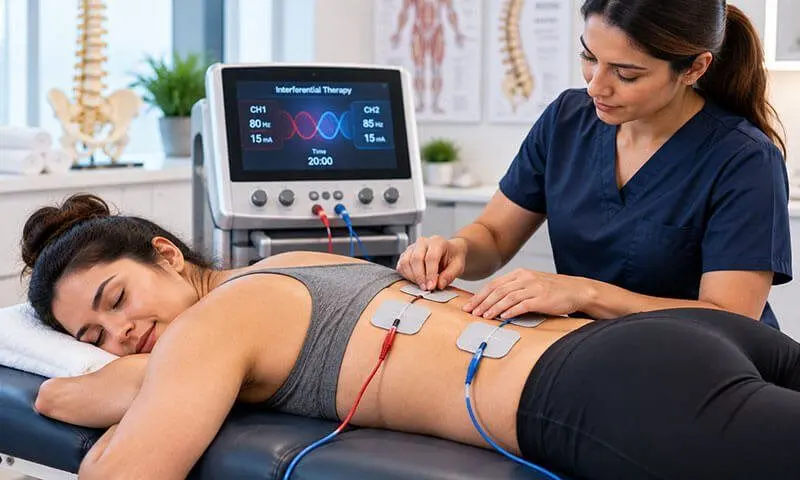
Interferential therapy (IFT) is a form of electrotherapy in which two mild electrical currents cross beneath the skin to produce a comfortable tingling sensation. It is used to reduce pain and muscle spasm so that movement and exercise become easier.
How IFT works
Four small pads are placed around the painful area. Two medium-frequency currents pass through the skin comfortably and “interfere” with each other in the deeper tissue, creating a low-frequency effect where it is needed. Most people feel a pleasant tingling or buzzing. The current is thought to reduce pain by influencing how pain signals travel along nerves, and may help relax muscle spasm.
When we use it
- Acute back or neck pain with muscle spasm
- Knee pain from osteoarthritis
- Shoulder pain that limits exercise
- Painful soft-tissue injuries after the first few days
Why IFT is only one part of treatment
Electrotherapy can bring short-term relief, but on its own it does not strengthen weak muscles or restore joint movement. We use IFT to make a painful area more comfortable so that hands-on treatment and exercise – the parts that bring lasting change – can be done properly. As pain settles, IFT is usually reduced or stopped.
A typical session
You lie or sit comfortably while the pads are placed. The intensity is slowly increased until you feel a strong but comfortable tingling. Treatment lasts about 10 to 15 minutes. Tell the therapist if it becomes uncomfortable or the sensation fades – both can be adjusted.
Who should not have IFT
- People with a pacemaker or other implanted electrical device
- During pregnancy, over the abdomen and pelvis
- Over a known cancer, infection or recent blood clot
- Over broken skin or areas with poor sensation
- Over the front of the neck or across the chest
IFT compared with TENS
Both are forms of electrical pain relief. TENS uses a low-frequency current through two pads and is often used at home. IFT uses two medium-frequency currents that cross in the deeper tissue, which many people find more comfortable over larger areas such as the lower back or knee. In the clinic, we choose whichever suits the area and your comfort best.
What results to expect
Most people notice pain easing during or soon after a session. This relief usually lasts a few hours, which is the ideal window for hands-on treatment and exercise. Over a course of treatment, as the underlying problem improves, the need for IFT reduces.
Interferential Therapy: questions patients ask us
What does IFT feel like?
A comfortable tingling or buzzing under the pads. It should never be painful.
How long does an IFT session last?
About 10 to 15 minutes, as part of a longer physiotherapy session.
Is IFT the same as TENS?
Both are electrotherapy for pain. IFT uses crossing medium-frequency currents that reach deeper tissue more comfortably; TENS uses low-frequency current through two pads.
Can I have IFT with a pacemaker?
No. IFT is not used for people with pacemakers or other implanted electronic devices.
Will IFT cure my pain?
It can ease pain for a while. Lasting improvement comes from treating the cause with manual therapy and exercise.

Reviewed by Dr. Varun Duggal – Chiropractor, Osteopath and Physiotherapist (MPT Ortho), Kirti Nagar, New Delhi.
Last updated: