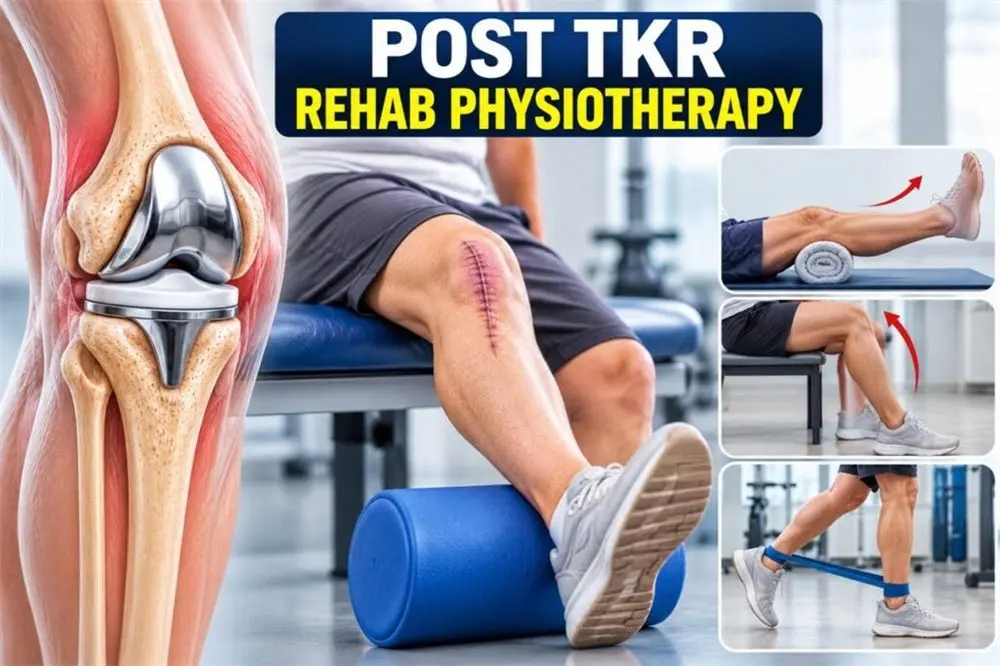
After a total knee (TKR) or total hip replacement (THR), structured physiotherapy restores movement, strength and confident walking. We provide this rehabilitation at our Kirti Nagar clinic, following your surgeon’s protocol, so you can get back to daily life safely.
Why rehab matters so much
The surgeon replaces the damaged joint surfaces, but the muscles around it are often weak and the new joint is stiff and swollen. How well you bend, straighten, walk and climb stairs months later depends heavily on the rehabilitation you do in the first weeks.
Early phase (first 2–6 weeks)
- Managing pain and swelling – ice, elevation, gentle movement
- Knee: working towards full straightening and at least 90 degrees of bending early
- Hip: following movement precautions given by your surgeon
- Walking with a walker or crutches, then a stick
- Safe transfers – bed, chair, toilet, car
- Breathing and circulation exercises
Strengthening phase (6–12 weeks)
- Progressive strength work for quadriceps, hamstrings and glutes
- Balance and step training
- Stationary cycling
- Walking without aids, on uneven ground and stairs
Return to activity (3 months onwards)
Most people return to walking, travelling, light gardening and swimming. We set personal goals – visiting a temple with steps, a morning walk in the park, playing with grandchildren – and work towards them.
Contact your surgeon promptly for increasing redness, wound discharge, fever, calf pain or swelling, or sudden breathlessness.
Post TKR & THR Rehab: questions patients ask us
When should physiotherapy start after knee replacement?
Usually the same or next day in hospital, and continuing at home soon after discharge.
How long does rehab after knee replacement take?
Most people make major gains within three months, with continued improvement up to a year.
Can I sit cross-legged after a knee replacement?
Many people cannot comfortably, and it may not be advised. Ask your surgeon.
What are hip replacement precautions?
Depending on the surgical approach, you may need to avoid deep bending, crossing legs or twisting for some weeks. Follow your surgeon’s advice.
Reviewed by Dr. Varun Duggal – Chiropractor, Osteopath and Physiotherapist (MPT Ortho), Kirti Nagar, New Delhi.
Last updated: