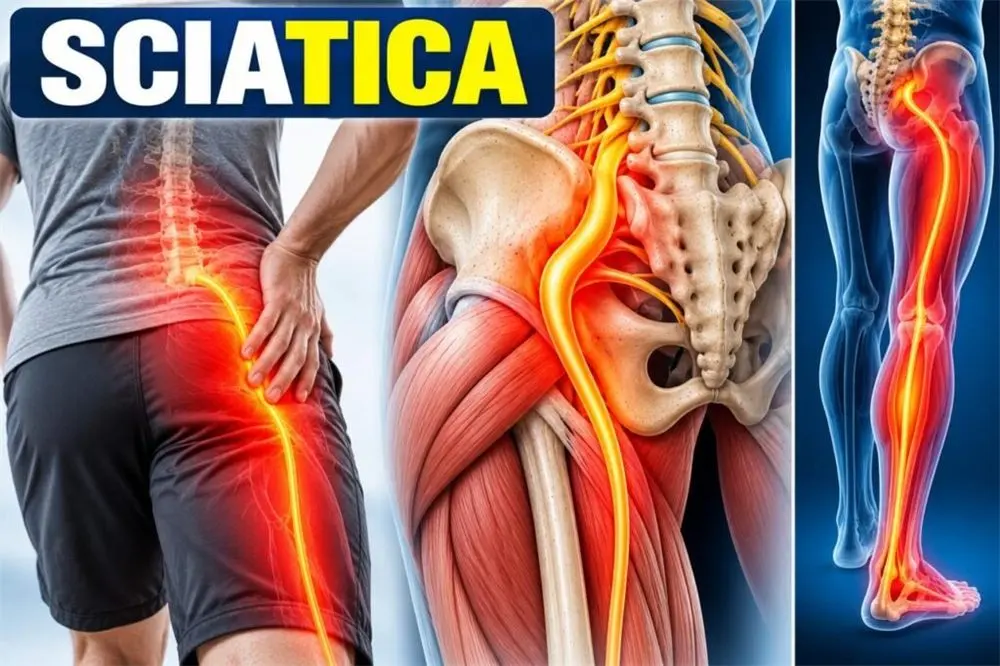
Sciatica is pain that travels from the lower back or buttock down the leg because the sciatic nerve or its roots are irritated, most often by a bulging disc. Most cases improve without surgery. We use spinal decompression, gentle manual therapy, nerve-gliding exercises and core strengthening.
What sciatica really is
Sciatica is not a diagnosis in itself – it describes a pattern of pain. The sciatic nerve is the largest nerve in the body, formed from nerve roots in the lower back. When one of those roots is squeezed or inflamed, pain shoots along its path: through the buttock, down the back of the thigh and sometimes into the calf and foot.
Common causes
- A bulging or herniated (slipped) disc – the most frequent cause
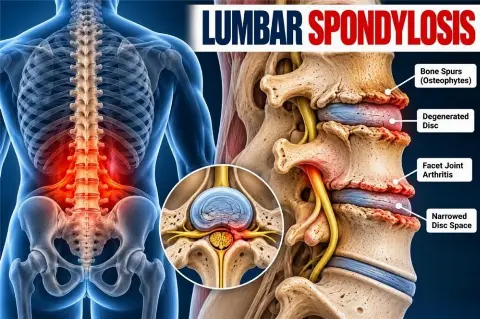
- Narrowing of the spinal canal (lumbar spinal stenosis) in older adults
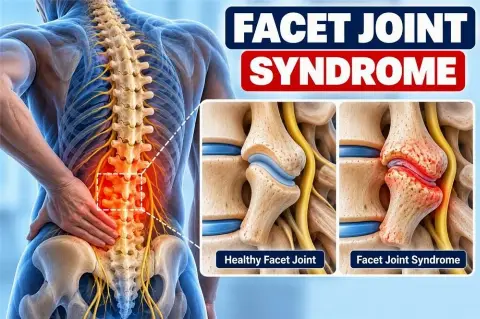
- Degenerative changes and bone spurs
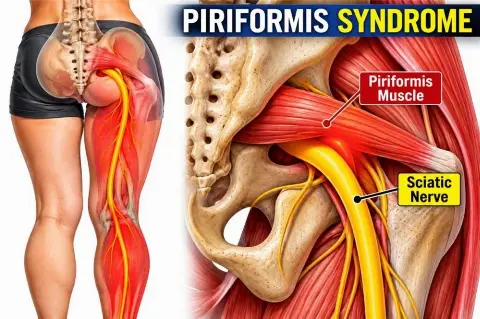
- Piriformis syndrome, where a buttock muscle irritates the nerve
- Pregnancy-related pressure and posture changes
How it feels
- Burning, electric or sharp pain down one leg, often worse than the back pain
- Tingling or pins and needles in the leg or foot
- Pain that worsens with sitting, coughing or sneezing
- Some weakness in the foot or calf in more severe cases
Emergency signs: numbness around the groin or genitals, difficulty passing urine or controlling bowels, or weakness in both legs can mean cauda equina syndrome. Go to a hospital immediately.
Treating sciatica without surgery
Research shows that most people with sciatica improve over weeks to a few months with good conservative care. Our job is to make that recovery faster and more comfortable, and to reduce the chance of it coming back.
- Assessment to confirm the level and cause, including nerve tests for strength, reflexes and sensation.
- Pressure relief with spinal decompression and positions that ease the leg pain.
- Gentle manual therapy for the lower back, pelvis and hip, chosen to avoid aggravating the nerve.
- Nerve gliding exercises that help the nerve move more freely.
- Progressive strengthening of the core, glutes and legs as pain settles.
When surgery is considered
Surgery may be recommended if there are emergency signs, if leg weakness is worsening, or if severe pain continues despite several months of good treatment. If we believe you need a surgical opinion, we will tell you and help you find the right specialist.
Living with sciatica while it settles
- Find your relief position. Many people feel better lying on their back with knees bent, or walking gently; others find standing easier than sitting.
- Limit sitting to 20–30 minutes at a time and use a small cushion behind your lower back.
- Avoid toe-touch stretches and heavy lifting until the leg pain has reduced.
- Track your symptoms. If leg pain is moving up towards the back (“centralising”), that is usually a good sign.
Sciatica can be frightening because the pain is intense, but in most people it steadily improves with the right care.
Sciatica: questions patients ask us
How long does sciatica take to heal?
Many people improve significantly within 6 to 12 weeks with treatment. Some recover faster; cases with large disc herniations or stenosis may take longer.
Is walking good for sciatica?
Usually yes. Short, regular walks keep the spine moving and help the nerve. Avoid long periods of sitting.
Can a chiropractor help sciatica?
Yes, in many cases. Gentle techniques and decompression can reduce pressure on the nerve. Forceful manipulation is avoided when nerve signs are significant.
Do I need surgery for sciatica?
Most people do not. Surgery is considered for emergency signs, progressive weakness, or severe pain that does not improve with several months of good conservative care.
What sleeping position helps sciatica?
Lying on your side with a pillow between your knees, or on your back with pillows under your knees, often reduces pressure on the nerve.

Reviewed by Dr. Varun Duggal – Chiropractor, Osteopath and Physiotherapist (MPT Ortho), Kirti Nagar, New Delhi.
Last updated: