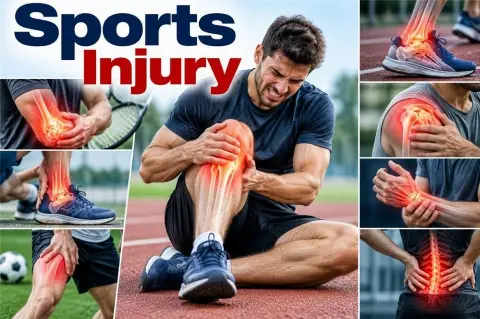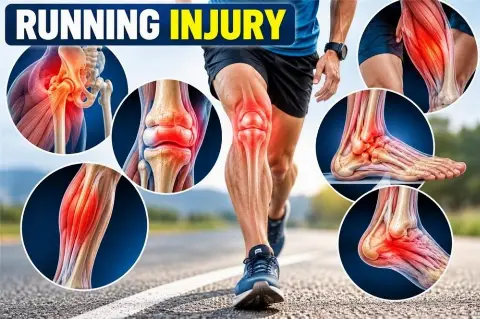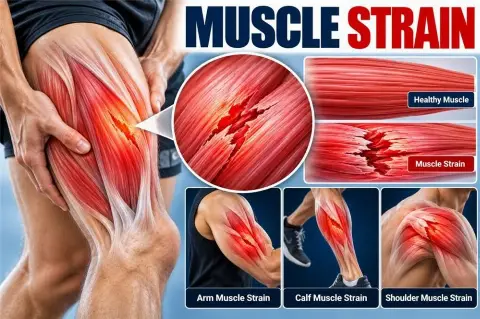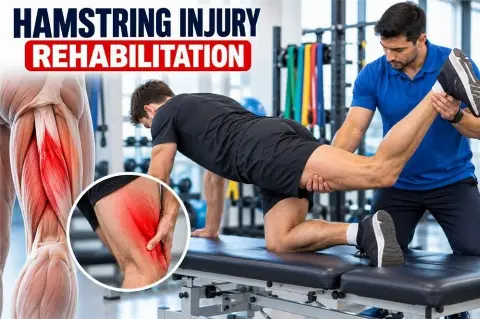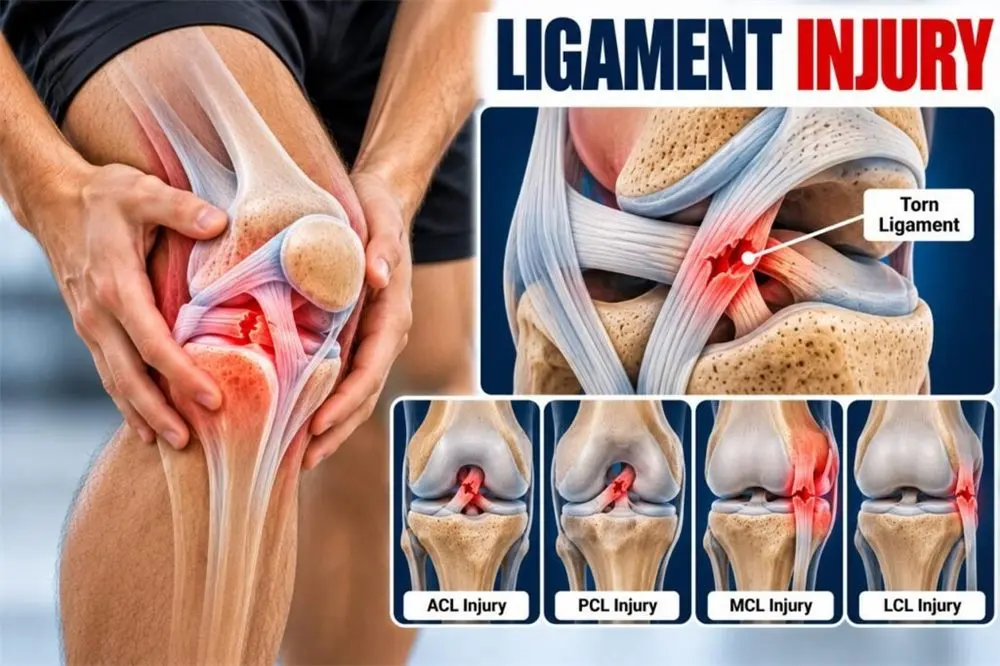
Ligaments are strong bands connecting bone to bone that keep joints stable. Injuries range from mild sprains to complete tears, most often in the ankle, knee, wrist and thumb. Most heal well with protection, early guided movement and progressive strength and balance training; some complete tears need surgery.
Grades of ligament injury
- Grade 1: stretched fibres; mild pain and swelling, joint stable
- Grade 2: partial tear; more pain, swelling, some looseness
- Grade 3: complete tear; significant instability
Commonly injured ligaments
- Ankle: lateral ligaments (ATFL) – the classic rolled ankle
- Knee: MCL (inner side), ACL (inside the joint), LCL and PCL
- Wrist and thumb: from falls, including “skier’s thumb”
- Shoulder: AC joint sprains from falls onto the shoulder
How ligaments heal
Ligaments have a limited blood supply and heal slowly, laying down new collagen over weeks to months. Controlled movement during healing helps the new fibres line up properly and become strong. Too much rest leads to stiffness and weakness; too much load too soon can stretch the healing ligament.
Our treatment
- Assessment of stability and grading; imaging if needed
- Protection – taping, bracing or modified activity
- Swelling control and gentle range of motion
- Progressive strengthening of the muscles that support the joint
- Balance and proprioception training
- Return to work or sport with clear criteria
Some complete tears – like many ACL tears in athletes – need surgical reconstruction. We provide pre- and post-surgery rehabilitation.
Ligament Injury: questions patients ask us
How long does a ligament injury take to heal?
Mild sprains take a few weeks; partial tears six to twelve weeks; complete tears may take months or need surgery.
Can a torn ligament heal without surgery?
Many ligaments, such as the MCL and ankle ligaments, heal well with rehab. Some, like the ACL, often do not heal on their own.
Should I use a brace?
A brace can protect the ligament early on and during return to sport.
Why is balance training important after a sprain?
Ligament injuries affect joint position sense; balance training reduces the risk of re-injury.
When do I need an MRI?
If there is significant instability, locking, or the injury is not improving as expected.

Reviewed by Dr. Varun Duggal – Chiropractor, Osteopath and Physiotherapist (MPT Ortho), Kirti Nagar, New Delhi.
Last updated: