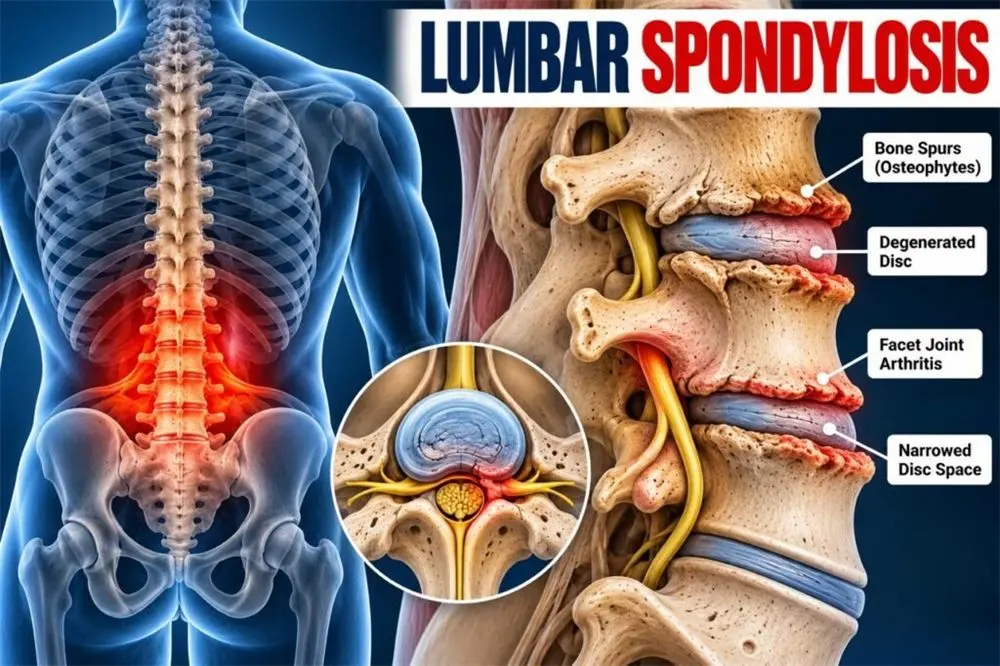
Lumbar spondylosis is age-related wear and tear in the lower spine – discs, facet joints and bony spurs. It can cause stiffness, aching and sometimes leg symptoms. Gentle mobilisation, decompression and a regular strengthening and walking routine help most people stay active.
What happens in lumbar spondylosis
The lower back carries most of the body’s weight. Over decades, its discs thin, the facet joints at the back of the spine develop arthritis, and small bony spurs may form. In some people this narrows the spaces where nerves exit, causing leg pain or tingling.
How it usually feels
- Stiffness on getting out of bed that eases after moving around
- Aching after standing or walking for a long time
- Difficulty bending to tie shoelaces or pick things up
- Pain that eases when sitting or leaning forward (common if the canal is narrowed)
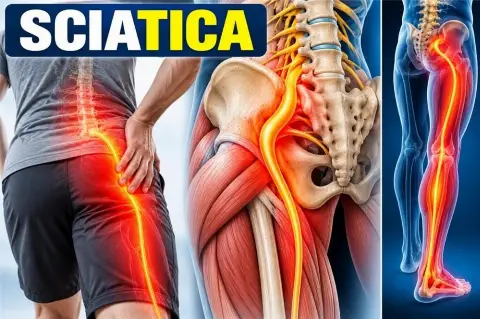
- Sometimes heaviness or tingling in the legs
Our treatment plan
- Low-force chiropractic or osteopathic mobilisation for stiff joints
- Spinal decompression when nerve symptoms are present
- Heat and soft-tissue work for muscle tightness
- Flexibility work for the hips and hamstrings, which affect the lower back
- Core and glute strengthening suited to your age and fitness
- A gradual walking or cycling plan
We adapt every technique to bone health. For patients with osteoporosis, we use gentle methods only.
At home
Morning stretches before getting out of bed, regular short walks, avoiding long periods in one position, and using a chair with good lower-back support all reduce symptoms. Many patients find a warm shower or hot pack helps morning stiffness.
Warning signs: leg weakness that is getting worse, numbness around the groin, bladder or bowel changes, or severe night pain need medical attention without delay.
Lumbar Spondylosis: questions patients ask us
Is lumbar spondylosis the same as arthritis of the spine?
Broadly yes – it describes arthritis-type changes in the lower spine’s discs and joints.
Can lumbar spondylosis cause leg pain?
Yes, if bony spurs or disc changes narrow the space around a nerve. This is called radiculopathy or, if the central canal is narrowed, stenosis.
What exercises are good for lumbar spondylosis?
Gentle knee-to-chest stretches, pelvic tilts, bridging, walking and stationary cycling are common starting points.
Is it safe to see a chiropractor at an older age?
Yes. Techniques are adjusted for age and bone health; we use low-force methods where needed.
Will it keep getting worse?
Changes on X-ray may progress slowly, but pain and function often stay stable or improve with regular exercise.

Reviewed by Dr. Varun Duggal – Chiropractor, Osteopath and Physiotherapist (MPT Ortho), Kirti Nagar, New Delhi.
Last updated: