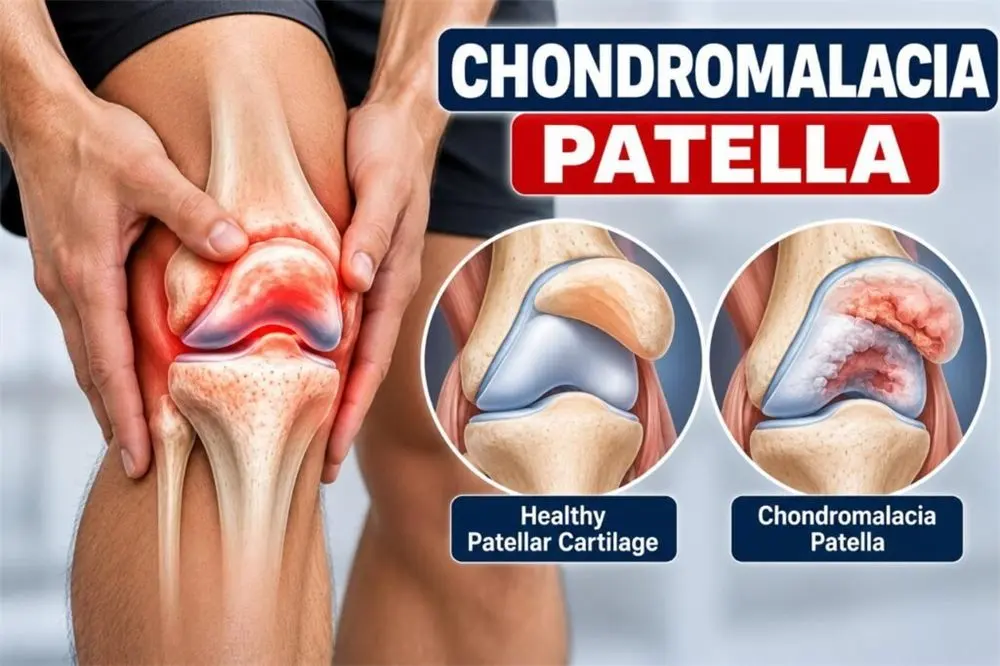
Chondromalacia patella is softening or roughening of the cartilage behind the kneecap. It causes pain at the front of the knee, especially with stairs, squatting and kneeling, and sometimes a grinding feeling. Strengthening the quadriceps and hip muscles and managing load are the mainstays of treatment.
What changes in the knee
The underside of the kneecap is lined with thick, smooth cartilage that glides along a groove in the thigh bone. With repeated overload or poor kneecap tracking, this cartilage can soften. The term is often used on MRI reports and overlaps with patellofemoral pain syndrome.
Signs and symptoms
- Ache at the front of the knee
- Grinding or crackling under the kneecap
- Pain with stairs (especially downstairs), squatting and kneeling
- Pain after long sitting with bent knees
- Mild swelling after activity
Grinding alone, without pain, is common and usually not a concern.
Treatment
- Quadriceps strengthening – especially in ranges that are comfortable for the kneecap
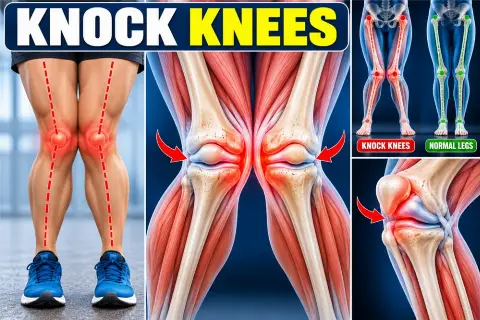
- Hip and glute strengthening to stop the knee rolling inward
- Kneecap mobilisation and soft-tissue release of tight thigh muscles
- Taping to reduce pain during exercise
- Load management – limit deep squats and kneeling for a while
- Weight and footwear advice
Outlook
Cartilage changes may not completely reverse, but most people become largely pain-free with consistent strengthening. Low-impact activities such as cycling and swimming are excellent while the knee settles.
Chondromalacia Patella: questions patients ask us
Can chondromalacia patella heal?
Mild cartilage softening may improve, and pain usually reduces significantly with strengthening.
Is squatting bad for chondromalacia?
Deep squats can aggravate it early on. Shallow squats are often fine and are gradually progressed.
Is knee grinding dangerous?
Grinding without pain is common and usually harmless.
What sports are good with chondromalacia?
Cycling, swimming and walking on flat ground are usually well tolerated.
Do I need surgery for chondromalacia patella?
Rarely. Exercise-based treatment is the standard approach.
Reviewed by Dr. Varun Duggal – Chiropractor, Osteopath and Physiotherapist (MPT Ortho), Kirti Nagar, New Delhi.
Last updated: