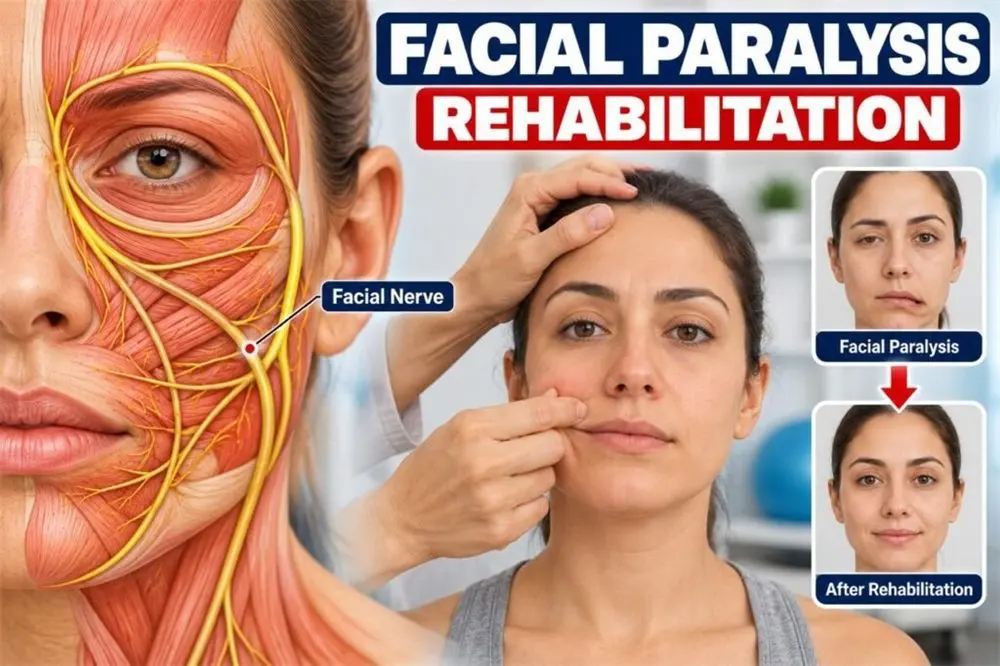
Facial paralysis is loss of movement in some or all facial muscles, caused by Bell’s palsy, stroke, ear or facial surgery, injury or infections. Rehabilitation includes protecting the eye, gentle exercises, massage and neuromuscular retraining to restore symmetrical, controlled movement and manage unwanted linked movements.
Causes of facial paralysis
- Bell’s palsy – the most common cause
- Stroke – usually affecting the lower face
- Ear infections, Ramsay Hunt syndrome (shingles)
- Surgery for tumours near the facial nerve
- Facial injuries
Stages of recovery
Early (flaccid) stage
Little or no movement. Focus on eye care, gentle massage and very light, assisted exercises.
Recovery stage
Movement starts returning. Slow, controlled, mirror-guided exercises help muscles work evenly.
Synkinesis stage
Some people develop linked movements – for example the eye closing when smiling – or tightness. Neuromuscular retraining, stretching and relaxation help regain control.
What sessions include
- Facial assessment and grading
- Massage and soft-tissue stretching
- Small, precise, mirror-guided movements
- Training to separate linked movements
- Advice on eating, drinking and speaking
- Home programme with clear instructions
Emotional impact
Facial changes affect confidence and social life. We keep sessions private and supportive, and celebrate small gains. Recovery can be slow, but steady practice makes a meaningful difference.
Facial Paralysis Rehabilitation: questions patients ask us
What causes facial paralysis?
Most often Bell’s palsy, but also stroke, infections, surgery or injury.
What is synkinesis?
Unwanted linked movements, such as the eye closing when you smile, that can develop during nerve recovery.
How long does facial paralysis recovery take?
From weeks to many months, depending on the cause and nerve damage.
Can exercises make facial paralysis worse?
Strong, effortful exercises may encourage synkinesis. Slow, controlled movements are preferred.
Is facial rehabilitation useful late in recovery?
Yes. Neuromuscular retraining can still improve control and symmetry.
Reviewed by Dr. Varun Duggal – Chiropractor, Osteopath and Physiotherapist (MPT Ortho), Kirti Nagar, New Delhi.
Last updated: