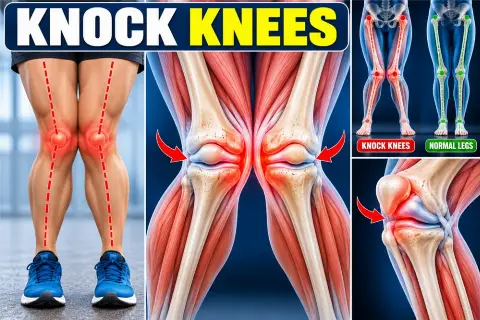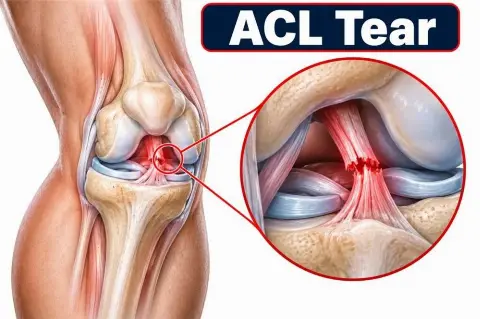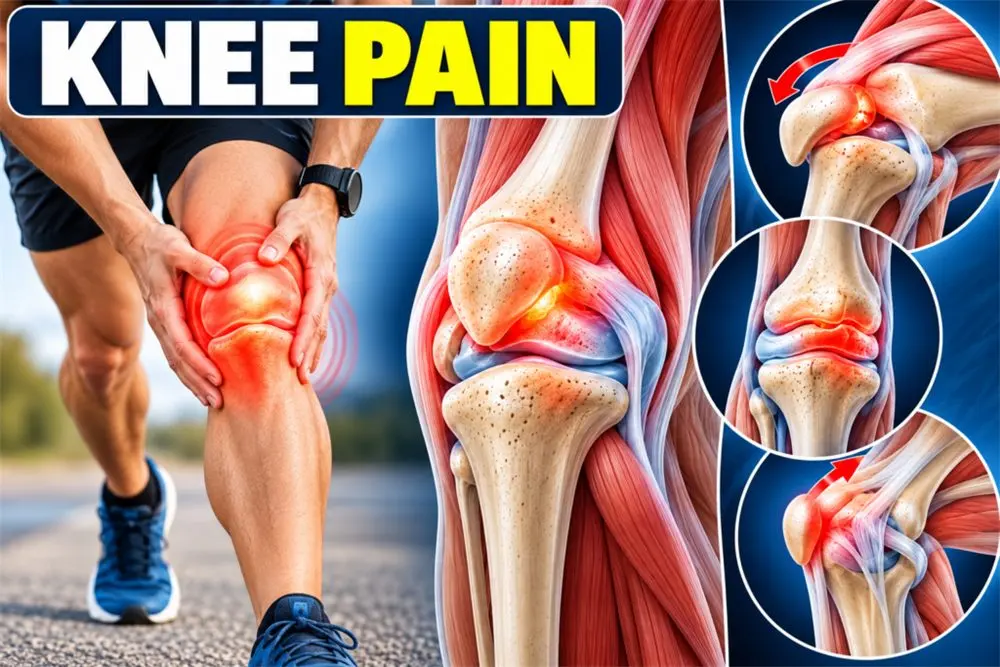
Knee pain is most often caused by osteoarthritis, kneecap (patellofemoral) problems, ligament or meniscus injuries, or tendon overload. Most cases improve without surgery through targeted strengthening of the thigh and hip muscles, joint mobilisation, weight and activity advice, and therapies like laser or shockwave where helpful.
Why knees hurt
The knee sits between two long levers – the thigh and the shin – so it takes large forces with every step, squat and stair. It depends on strong muscles above and below it, especially the quadriceps and hip muscles. When these weaken, or when cartilage, ligaments or tendons are injured, the knee lets you know.
Common causes by age
- Teens and young adults: kneecap pain, jumper’s knee, sports ligament and meniscus injuries
- Active adults: runner’s knee, IT band pain, meniscus tears from twisting
- Over 45: osteoarthritis, degenerative meniscus tears
- Any age: pain referred from the hip or lower back
What you may notice
- Pain climbing or coming down stairs
- Difficulty sitting cross-legged, squatting or using an Indian-style toilet
- Swelling after activity
- Clicking, catching or a feeling of giving way
- Morning stiffness that eases with movement
A hot, red, very swollen knee with fever, or a knee that suddenly cannot bear weight after injury, needs urgent medical assessment.
Our approach
- Assess the knee, hip, ankle and the way you walk and squat.
- Reduce pain with manual therapy, soft-tissue work and, where suitable, laser, IFT or shockwave.
- Strengthen the quadriceps, hamstrings, glutes and calves progressively.
- Improve balance and control to protect the joint.
- Give practical advice on footwear, weight, stairs and floor sitting.
Can you avoid knee replacement?
Many people told they will eventually need a knee replacement manage well for years with a good exercise programme. Strengthening is consistently one of the most effective treatments for knee arthritis. If replacement does become necessary, being stronger beforehand helps recovery too.
Practical tips for everyday knee comfort
- Stairs: go up with the stronger leg first and come down with the painful leg first, holding the railing.
- Sitting: use a chair rather than the floor for meals and prayers while the knee is painful; a raised toilet seat or commode helps if squatting is hard.
- Footwear: cushioned shoes with good grip; avoid walking barefoot on hard floors.
- Daily exercise: 10 slow straight-leg raises and 10 sit-to-stands from a chair, twice a day, are a good starting point for most people.
- Swelling: a cold pack for 10–15 minutes after activity can help.
Knee Pain: questions patients ask us
Can knee pain be treated without surgery?
Yes. Most knee pain – including arthritis and many meniscus problems – improves with exercise-based physiotherapy and manual therapy.
Is walking good for knee pain?
Usually yes, in amounts your knee tolerates. Increase distance gradually and wear supportive shoes.
Should I avoid stairs with knee pain?
Not completely. Lead with the stronger leg going up and the painful leg going down, and use the railing.
Do knee caps or braces help?
They may give comfort for some people, but strengthening the muscles is what supports the knee long term.
When is an MRI needed for knee pain?
After a twisting injury with locking or instability, or if pain does not improve with treatment.

Reviewed by Dr. Varun Duggal – Chiropractor, Osteopath and Physiotherapist (MPT Ortho), Kirti Nagar, New Delhi.
Last updated: