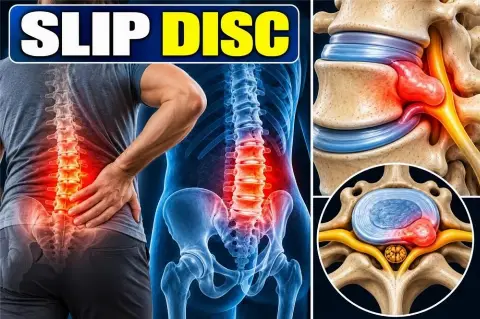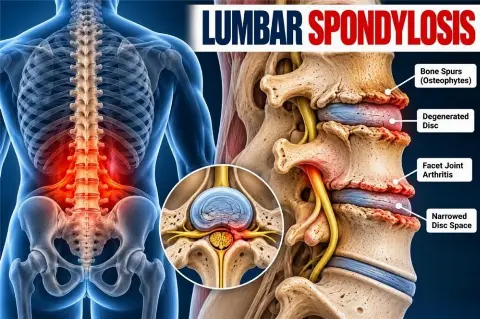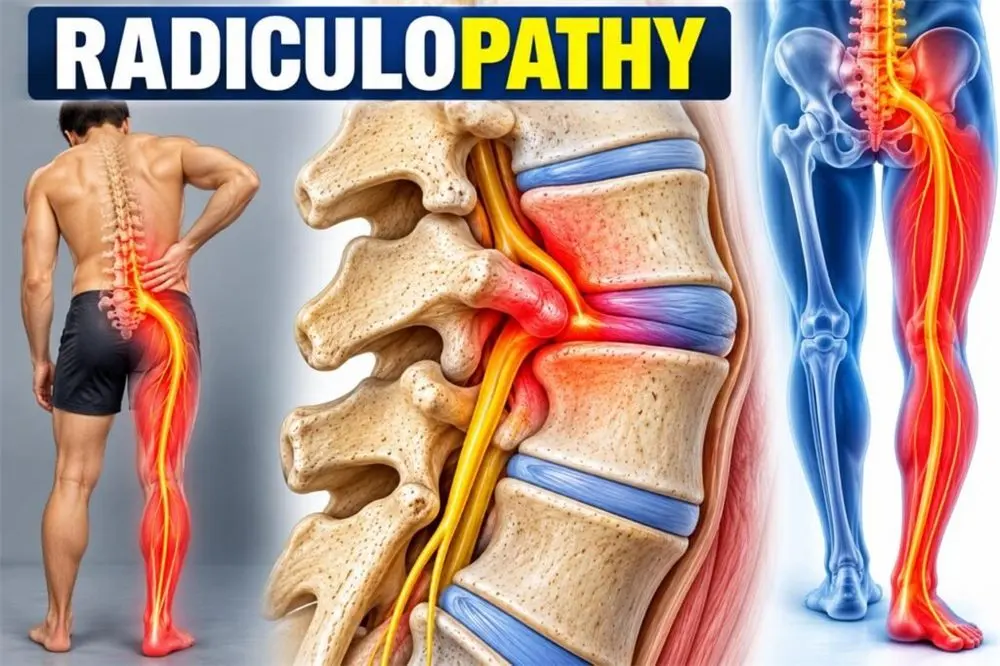
Radiculopathy is irritation or compression of a spinal nerve root, causing pain, numbness, tingling or weakness in the arm (cervical) or leg (lumbar). Disc herniation and bony narrowing are common causes. Decompression, careful manual therapy, nerve mobilisation and strengthening help most people recover without surgery.
Nerve root vs nerve
A nerve root is where a nerve branches off the spinal cord and leaves the spine. Each root supplies a specific strip of skin (a dermatome) and certain muscles. By mapping where you feel symptoms and which muscles are weak, we can usually pinpoint which root is involved – C6, C7, L5 or S1, for example.
Cervical radiculopathy
- Neck pain with pain spreading into the shoulder, arm or hand
- Tingling or numbness in specific fingers
- Weak grip or difficulty lifting the arm
- Sometimes relief from resting the hand on top of the head
Lumbar radiculopathy
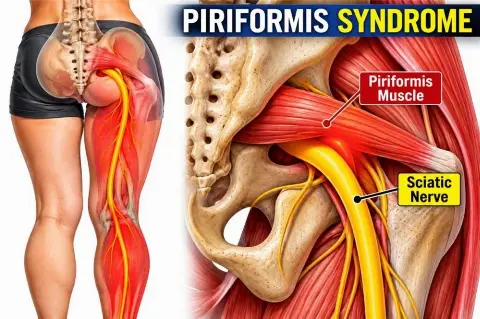
- Pain from the back into the buttock, leg and foot (sciatica)
- Numbness on the top or sole of the foot
- Weakness lifting the toes or pushing up onto the toes
- Reduced ankle or knee reflexes
Treatment plan
- Full neurological examination and review of any MRI.
- Cervical or lumbar decompression to reduce pressure on the nerve root.
- Gentle mobilisation of nearby spinal segments – never forceful at the irritated level.
- Nerve-gliding (neurodynamic) exercises.
- Posture correction and progressive strengthening.
We track strength and sensation at each visit. If weakness worsens, we refer you for an urgent specialist opinion.
Urgent signs: worsening weakness, symptoms in both limbs, difficulty walking, or bladder and bowel changes.
Radiculopathy: questions patients ask us
Is radiculopathy the same as sciatica?
Sciatica is a common type of lumbar radiculopathy affecting the roots that form the sciatic nerve.
Can radiculopathy heal on its own?
Many cases improve over weeks to months. Treatment speeds recovery and reduces pain.
Will numbness go away?
Sensation often returns as the nerve recovers, though it can lag behind pain relief.
Is surgery needed for radiculopathy?
Only when there is progressive weakness, emergency signs, or severe pain unresponsive to good conservative care.
Can I keep working with radiculopathy?
Usually yes, with modifications – regular breaks, ergonomic changes and avoiding heavy lifting.

Reviewed by Dr. Varun Duggal – Chiropractor, Osteopath and Physiotherapist (MPT Ortho), Kirti Nagar, New Delhi.
Last updated: