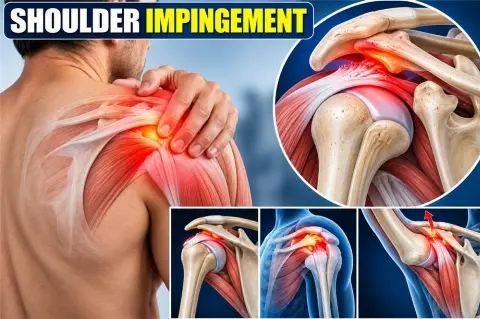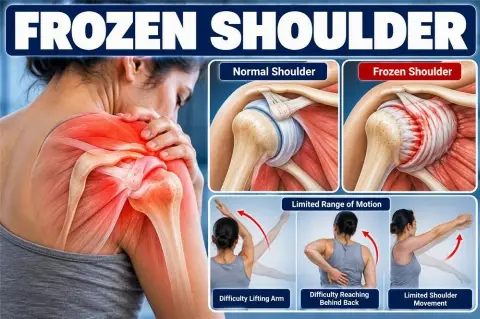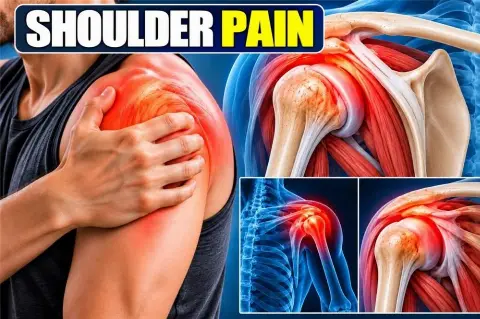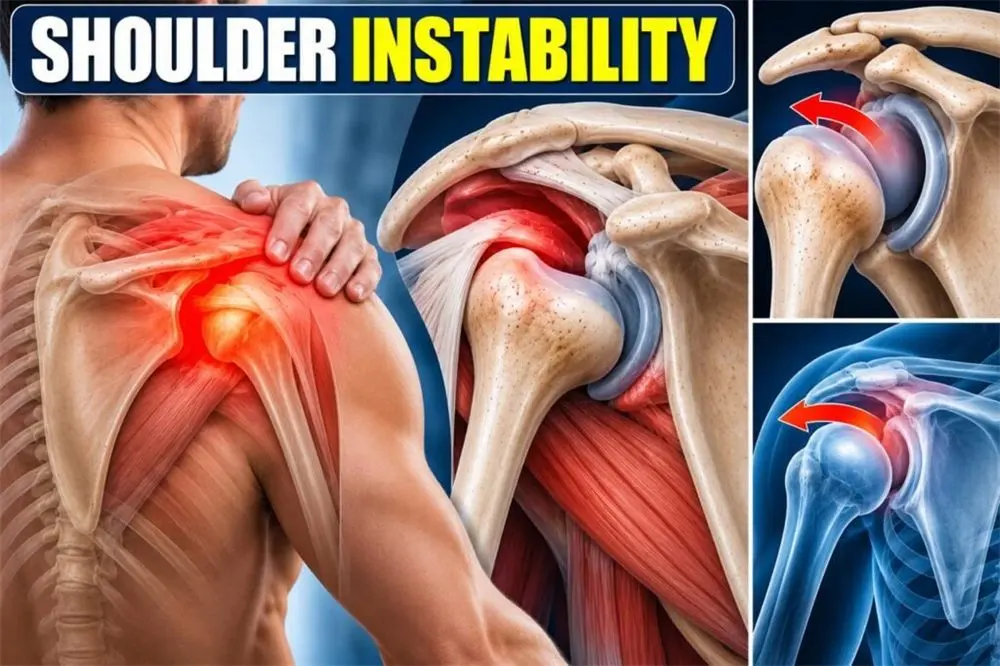
Shoulder instability means the ball of the shoulder moves too much in its socket, sometimes slipping partly (subluxation) or fully (dislocation). It may follow an injury or come from naturally loose joints. A targeted strengthening and control programme is the first treatment; surgery is considered for repeated dislocations.
Two main types
Traumatic instability
Usually starts with a fall or forceful movement that dislocates the shoulder – common in contact sports, cricket fielding, and bike falls. The front of the joint capsule and labrum may be damaged, making repeat dislocations more likely, especially in young people.
Atraumatic (multidirectional) instability
Some people have naturally loose ligaments. Their shoulders may slip without a major injury, often in several directions. Muscle control is the key to managing this type.
Symptoms
- A feeling that the shoulder is “going out” or clunking
- Apprehension when the arm is raised and turned outwards
- Dead-arm sensations
- Pain and weakness after episodes
Rehabilitation programme
- Protect and reduce pain after an acute dislocation (once reduced and cleared by a doctor).
- Restore range of motion safely, avoiding risky positions early.
- Strengthen the rotator cuff and shoulder-blade muscles.
- Retrain joint position sense and control with closed-chain and reaction exercises.
- Progress to sport- or work-specific strength and speed.
Forceful manipulation of an unstable shoulder is never used. Our focus is strength and control.
When surgery is considered
Young athletes with a first traumatic dislocation, or anyone with repeated dislocations despite good rehab, may be referred for a surgical opinion. We provide post-operative rehabilitation too.
Shoulder Instability: questions patients ask us
What should I do if my shoulder dislocates?
Get it put back in by a medical professional and X-rayed. Do not try to force it back yourself.
Can exercise fix a loose shoulder?
For many people, especially with naturally loose joints, targeted strengthening is very effective.
Will my shoulder dislocate again?
The risk is higher in young, active people after a first dislocation. Good rehab lowers it; some need surgery.
How long is rehab after a dislocation?
Usually three to four months before full return to contact or overhead sport.
Can I go to the gym with shoulder instability?
Yes, with guidance. Some exercises, such as behind-the-neck presses, should be avoided.

Reviewed by Dr. Varun Duggal – Chiropractor, Osteopath and Physiotherapist (MPT Ortho), Kirti Nagar, New Delhi.
Last updated: