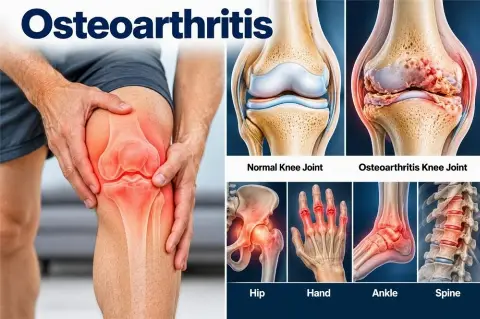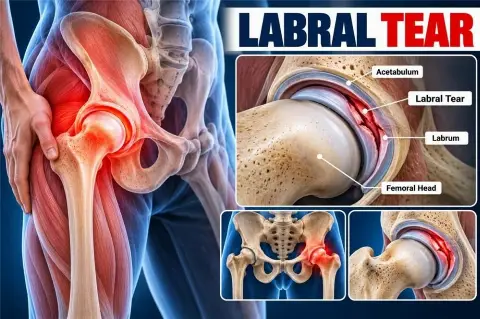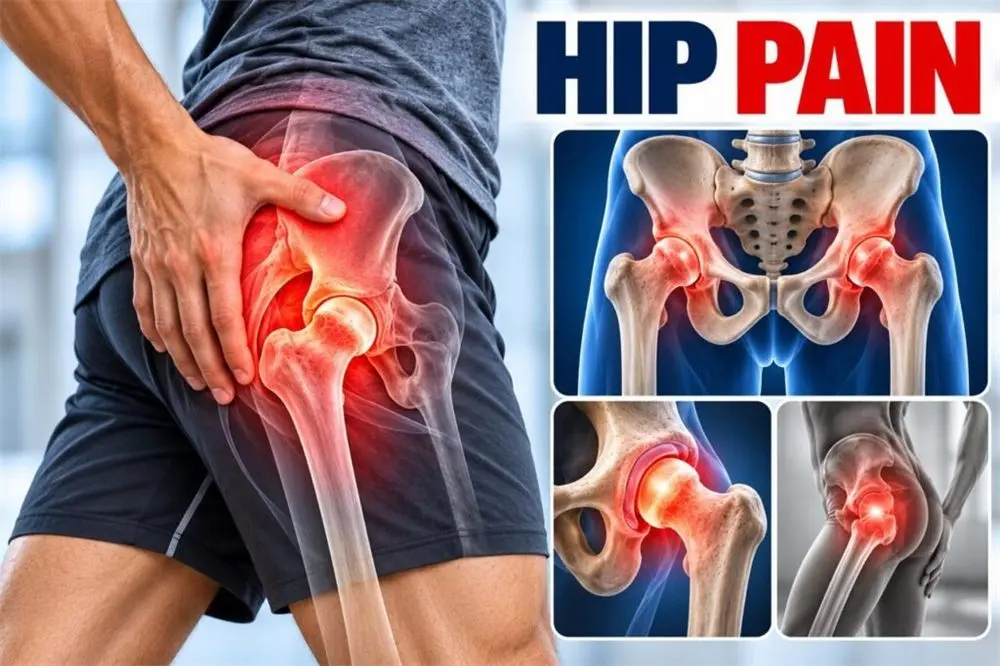
Hip pain may come from the joint itself (arthritis, labral tears), the tendons and bursa on the outside of the hip, the groin muscles, or the lower back. We identify the source, then use joint mobilisation, soft-tissue treatment and targeted hip and core strengthening.
Location matters
- Groin or front of hip – often the hip joint itself: osteoarthritis, labral tear or impingement.
- Outer hip – gluteal tendinopathy or trochanteric bursitis; painful lying on that side.
- Buttock – often referred from the lower back or SI joint, or piriformis syndrome.
Common causes
- Hip osteoarthritis – stiffness putting on socks, getting out of a car
- Gluteal tendinopathy – common in women over 40
- Labral tears and femoroacetabular impingement – in active younger adults
- Muscle strains in sport
- Pain referred from the lumbar spine
Severe hip pain after a fall in an older person – especially if you cannot bear weight – may be a fracture and needs emergency care.
Treatment
- Hip joint mobilisation to improve rotation and flexion
- Lower back and SI joint treatment where they contribute
- Soft-tissue release of hip flexors, glutes and adductors
- Progressive strengthening of the glutes and core
- Shockwave therapy for stubborn outer hip tendon pain
- Advice on sleeping position, sitting and stairs
Practical tips
If outer hip pain disturbs your sleep, put a pillow between your knees when lying on your side. Avoid crossing your legs and standing with your weight shifted onto one hip – both compress the outer hip tendons.
Easing hip pain day to day
- Sit on chairs that keep your hips slightly higher than your knees; avoid very low sofas.
- When getting into a car, sit down first and then swing both legs in together.
- Stand evenly on both feet rather than hanging on one hip.
- Walk regularly on flat ground, increasing distance slowly.
- Glute bridges and side-lying leg lifts, done slowly, help many people – but follow the exact exercises from your assessment.
Hip Pain: questions patients ask us
How do I know if my hip pain is from my back?
Back-related hip pain often comes with back stiffness and may change with spine movement. An examination helps tell the difference.
Why does my hip hurt when lying on my side?
Often from gluteal tendinopathy or bursitis on the outer hip. A pillow between the knees helps.
Is walking good for hip arthritis?
Generally yes, within comfort. Cycling and water exercise are good alternatives.
Can young people get hip pain?
Yes – often from labral tears, impingement or muscle strains in sport.
Will I need a hip replacement?
Only if severe arthritis pain persists despite good treatment. Many people manage well without surgery.

Reviewed by Dr. Varun Duggal – Chiropractor, Osteopath and Physiotherapist (MPT Ortho), Kirti Nagar, New Delhi.
Last updated: