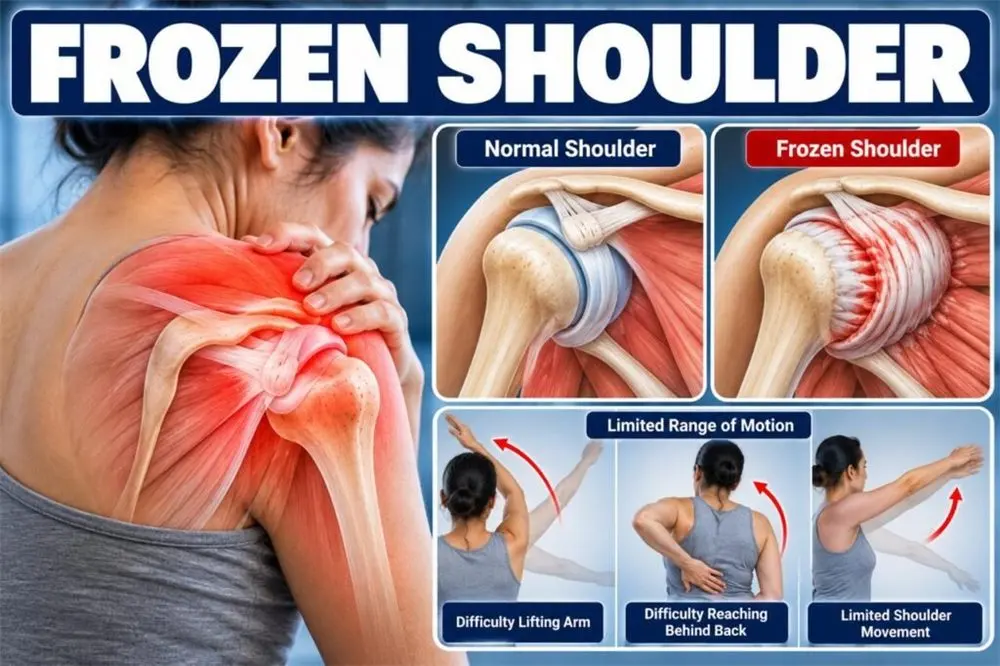
Frozen shoulder (adhesive capsulitis) is painful stiffness of the shoulder joint caused by thickening and tightening of its capsule. It passes through freezing, frozen and thawing stages over many months. Stage-appropriate mobilisation, stretching and pain relief help shorten recovery and restore movement.
The three stages
1. Freezing (painful) stage
Pain gradually increases, especially at night, and movement starts to reduce. This stage usually lasts a few months.
2. Frozen (stiff) stage
Pain may ease, but the shoulder becomes very stiff. Reaching overhead, behind your back or to fasten clothing is difficult.
3. Thawing stage
Movement slowly returns. Without treatment, the whole process can take one to three years.
Who gets it
- Mostly adults between 40 and 65, more often women
- People with diabetes – especially common, and often more stubborn
- Thyroid conditions
- After a period of keeping the arm still – injury, surgery or stroke
Treatment for each stage
Treatment is different in each stage, which is why a one-size plan often fails. In the painful stage we focus on calming pain – gentle mobilisation, heat or electrotherapy, and pain-free movement – and avoid aggressive stretching, which can make it worse. In the stiff and thawing stages, we progress to stronger joint mobilisation, capsular stretching and strengthening.
- Graded joint mobilisation techniques
- Soft-tissue work for surrounding muscles
- Upper-back and neck treatment to reduce overall strain
- Home stretching programme matched to your stage
- Advice for sleeping and daily tasks
Some people benefit from a steroid injection from their doctor during the painful stage, which can make physiotherapy more comfortable. We are happy to coordinate.
Diabetes and frozen shoulder
If you have diabetes, good blood sugar control helps recovery. Frozen shoulder can also affect both shoulders over time, so early treatment matters.
Frozen Shoulder: questions patients ask us
How long does frozen shoulder last?
Without treatment it can last one to three years. With good treatment, most people regain useful movement much sooner.
Should I push through the pain when stretching?
No. Especially in the painful stage, aggressive stretching can flare it up. Stretches should be firm but tolerable.
Why is frozen shoulder common in diabetes?
High blood sugar is thought to affect collagen in the shoulder capsule, making it stiffer and thicker.
Can frozen shoulder come back?
It rarely returns in the same shoulder, but it can develop in the other shoulder.
Is surgery needed for frozen shoulder?
Rarely. Most people recover with physiotherapy, sometimes with an injection. Procedures are considered only for very stubborn cases.

Reviewed by Dr. Varun Duggal – Chiropractor, Osteopath and Physiotherapist (MPT Ortho), Kirti Nagar, New Delhi.
Last updated: