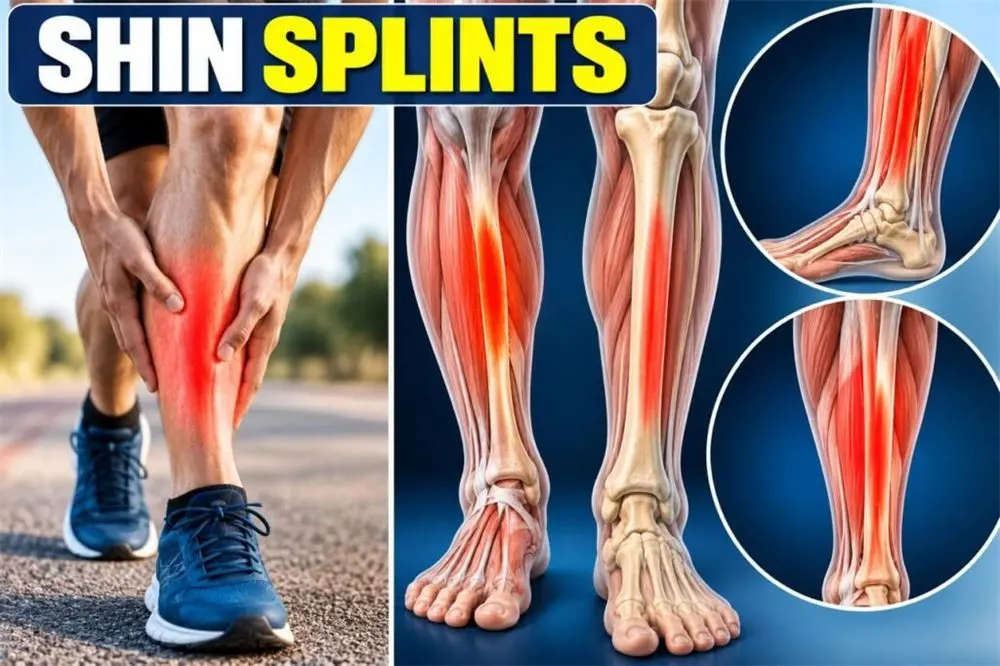
Shin splints (medial tibial stress syndrome) cause aching along the inner edge of the shin bone, usually from a sudden increase in running or jumping. Reducing load, strengthening the calves and feet, checking footwear and gradually returning to running are effective. Persistent focal pain needs checking for a stress fracture.
Who gets shin splints
We see shin splints often in new runners, army and police aspirants training for physical tests, dancers, and sportspeople after a break. The common thread: too much running or jumping, too soon, often on hard surfaces.
Symptoms
- Aching along the inner lower half of the shin
- Pain at the start of a run that may ease, then return afterwards
- Tenderness over a long stretch of the bone (5 cm or more)
Sharp pain at one specific spot, pain at night or at rest, or pain that worsens throughout activity may indicate a stress fracture. Stop running and get assessed.
Contributing factors
- Sudden training increases – distance, speed or hills
- Hard or uneven running surfaces
- Worn-out or unsuitable shoes
- Weak calf and foot muscles
- Flat feet or over-pronation
- Low energy intake or low vitamin D in some athletes
Treatment plan
- Reduce running to a pain-free level; cross-train with cycling or swimming.
- Soft-tissue work for the calf muscles.
- Calf, foot and hip strengthening.
- Footwear review and gait advice.
- Graded return to running – increase weekly volume slowly.
Most people return to normal training within four to eight weeks.
Shin Splints: questions patients ask us
Can I run with shin splints?
Reduce to a pain-free level. Running through increasing pain can lead to a stress fracture.
How long do shin splints take to heal?
Usually two to eight weeks with load management and strengthening.
Do insoles help shin splints?
They may help some people with flat feet, alongside strengthening and training changes.
What is the difference between shin splints and a stress fracture?
Shin splints cause diffuse pain along the bone; a stress fracture causes sharp, localised pain that may persist at rest.
Is it common in army aspirants?
Yes, due to rapid increases in running and drills during preparation.

Reviewed by Dr. Varun Duggal – Chiropractor, Osteopath and Physiotherapist (MPT Ortho), Kirti Nagar, New Delhi.
Last updated: