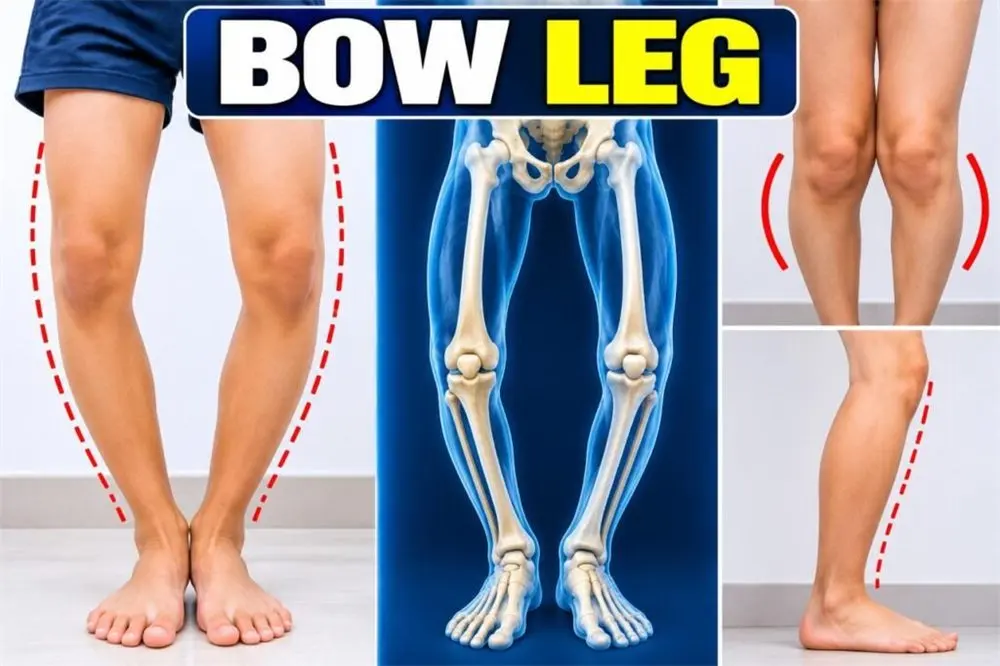
Bow legs (genu varum) means the knees stay apart when the ankles are together. It is normal in toddlers and usually straightens by about age 3. Persistent or worsening bowing may relate to rickets, Blount’s disease or knee arthritis. We assess alignment, manage pain with exercise, and refer when specialist care is needed.
Normal development
Babies are born with bowed legs from their position in the womb. Bowing often looks more obvious when toddlers start walking and usually corrects by about two to three years of age. Many children then pass through a knock-kneed phase before legs straighten in later childhood.
When bow legs need checking
- Bowing that persists or worsens after age 3
- Bowing on one side only
- Short stature or other bone concerns
- Pain, limping or frequent tripping
- Family history of bone conditions or a diet low in vitamin D
Possible causes include rickets (vitamin D deficiency), Blount’s disease (a growth plate problem) and old fractures. A paediatrician or orthopaedic specialist may advise X-rays and blood tests.
Bow legs in adults
In adults, bowing is often linked to inner-knee osteoarthritis, which wears down the inner side of the joint and increases the bow. This can cause pain on the inner knee when walking.
How physiotherapy helps
Exercise does not change bone shape, but it can improve how the legs work and reduce pain:
- Hip and thigh strengthening to improve knee alignment during movement
- Gait retraining and balance work
- Footwear and insole advice
- Pain management and strength work for knee arthritis
- Monitoring and referral when bracing or surgical correction may be needed
Bow Leg: questions patients ask us
Are bow legs normal in babies?
Yes. Most toddlers have bowed legs that straighten by around age 3.
Can exercise straighten bow legs?
Exercise cannot change bone shape but can improve strength, alignment during movement and comfort.
Can vitamin D deficiency cause bow legs?
Yes. Rickets can cause bowing; it needs medical treatment with vitamin D and calcium.
Are bow legs linked to knee arthritis?
In adults, bow legs can increase load on the inner knee and are associated with inner-knee arthritis.
When is surgery considered?
For severe or progressive deformity, usually decided by an orthopaedic specialist.

Reviewed by Dr. Varun Duggal – Chiropractor, Osteopath and Physiotherapist (MPT Ortho), Kirti Nagar, New Delhi.
Last updated: