
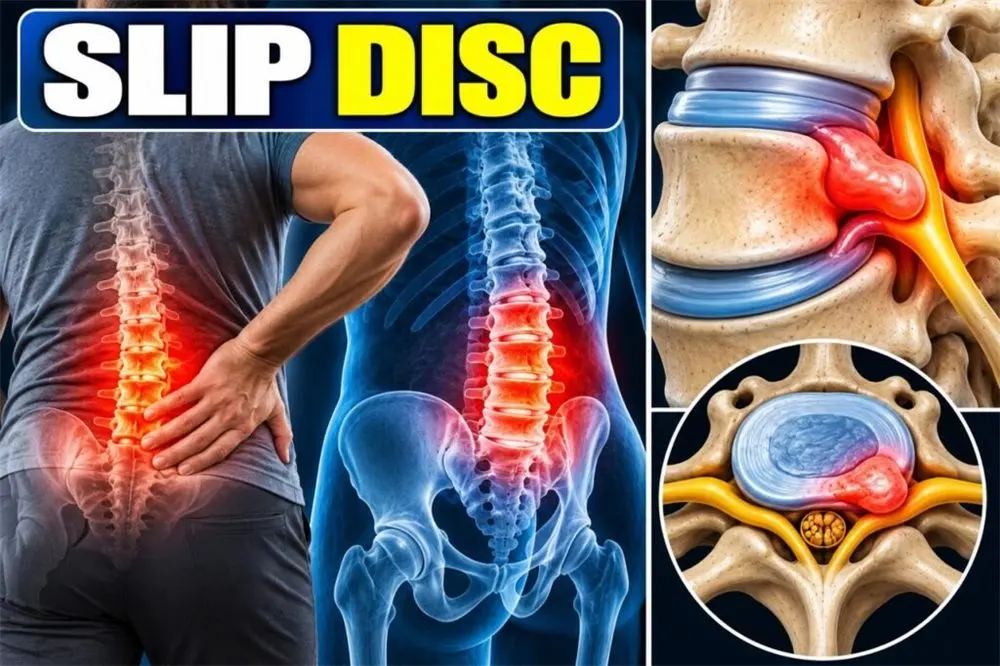
Every week, patients walk into our Kirti Nagar clinic convinced they have a slip disc. Some do. Many have a muscle or joint strain that will settle much faster. Knowing the difference helps you worry less and choose the right care.
Signs that point to a muscle or joint strain
- Pain stays in the back – it does not travel below the knee
- A tight, aching or “catching” feeling, often on one side
- Pain started after a specific movement, such as lifting or twisting
- It eases noticeably within a few days of gentle movement
Signs that point to a disc problem
- Pain, tingling or numbness running down one leg, sometimes into the foot
- Leg pain that feels worse than the back pain
- Pain that increases when you sit, cough or sneeze
- Weakness, such as the foot slapping down or difficulty standing on toes
What to do in the first few days
For either problem, gentle walking is usually better than lying in bed all day. Use heat for muscle spasm, break up sitting every 20–30 minutes, and avoid heavy lifting. Pain relief advised by your doctor can help you keep moving.
When to get assessed
Book an assessment if pain is not clearly improving after a week, if leg symptoms are present, or if this keeps happening. A careful examination – testing your reflexes, strength and sensation – usually tells us far more than an MRI alone.
Go to a hospital immediately if you notice numbness around the groin, difficulty passing urine or controlling your bowels, or rapidly worsening weakness in your legs.
The good news: most disc problems also improve without surgery. Read more about our slip disc treatment and back pain treatment.